

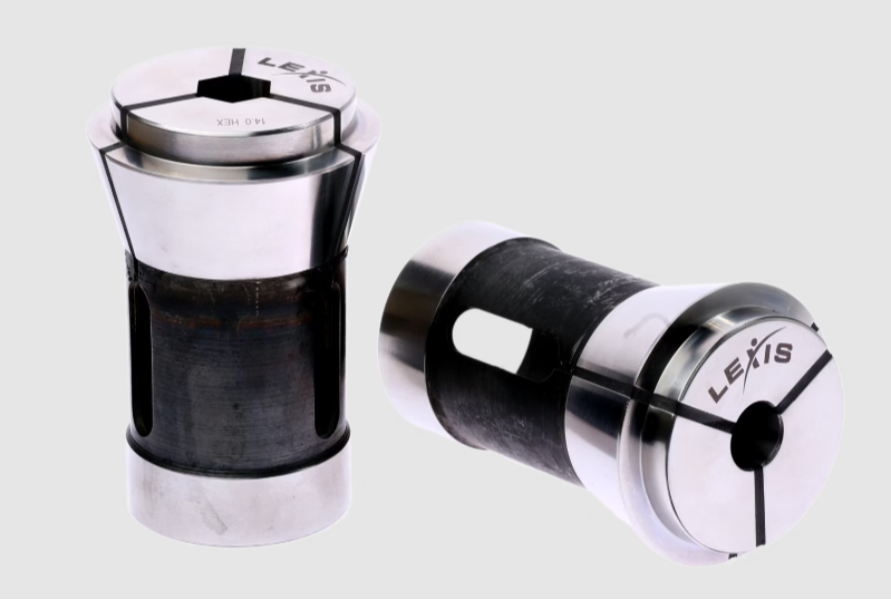
Turning operations require reliable workholding because the component must remain properly gripped while rotating under cutting forces. A Traub Collet is commonly associated with production turning applications where compact, repeatable workholding is required for suitable bar stock and components.
For machine shops and component manufacturers around Kinathukidavu, Tamil Nadu, understanding where these collets fit into production can make tooling selection more practical.
Understanding the Traub Collet
A Traub Collet is designed for compatible Traub-type machines and workholding arrangements. Depending on the machine configuration and collet design, it can be used to grip round stock or components during turning and related manufacturing processes.
The key purpose is straightforward: hold the workpiece securely and concentrically enough for the intended machining operation.
This makes collet condition, dimensional compatibility, and proper installation important considerations.
Applications in Production Turning
Traub-type machines have traditionally been associated with repetitive production of turned components. Collet workholding is particularly useful when similar parts need to be produced continuously from bar material.
Typical applications can include:
- Bushes and sleeves
- Pins and shafts
- Fastener components
- Small automotive parts
- Electrical components
- Precision turned parts
- General engineering components
The suitability of a particular collet depends on the machine, workpiece geometry, material, and required tolerances.
Why Collets Work Well for Repetitive Components
In repetitive manufacturing, workholding needs to provide more than grip. It must also support consistent loading and positioning from one machining cycle to another.
A correctly matched Traub Collet can provide uniform gripping around suitable workpieces. This can help operators maintain repeatable setups while reducing unnecessary variation caused by inconsistent clamping.
Compared with repeatedly adjusting a general-purpose workholding arrangement, a properly selected collet system can also simplify production of recurring component sizes.
Signs That a Collet Needs Attention
Workholding components are subject to repeated clamping cycles, chips, coolant, and production loads. They should therefore be inspected periodically.
Operators should investigate when they notice:
- Workpiece slipping
- Visible wear on gripping surfaces
- Difficulty inserting material
- Unusual marking on components
- Inconsistent component dimensions
- Damaged collet slots
- Reduced gripping consistency
These symptoms do not automatically mean the collet is the only cause. Machine alignment, spindle condition, material variation, and setup practices should also be considered.
Matching the Collet to the Machine
A Traub Collet should never be selected solely by estimating the workpiece diameter. Machine compatibility and collet specifications matter.
Machine shops should verify the collet type, dimensions, bore requirement, and intended application before ordering replacements.
LEXIS Tooling Systems Private Limited works with machine-tool accessories and tooling requirements for industrial users, including production environments where appropriate workholding selection is important.
Kinathukidavu benefits from its proximity to the wider Coimbatore engineering and manufacturing ecosystem, where turning, machining, fabrication, pumps, automotive components, and general engineering create continuing demand for dependable machine tooling.
For these businesses, the Traub Collet remains a practical workholding component when matched correctly with the machine and job. Good selection, routine inspection, and clean installation help ensure that a simple collet continues supporting consistent production rather than becoming an overlooked source of machining variation.