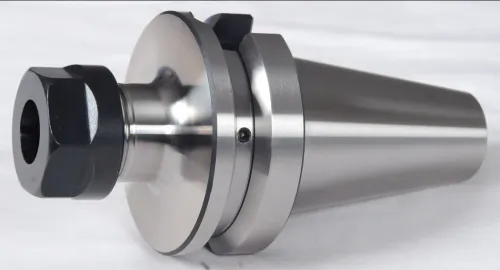


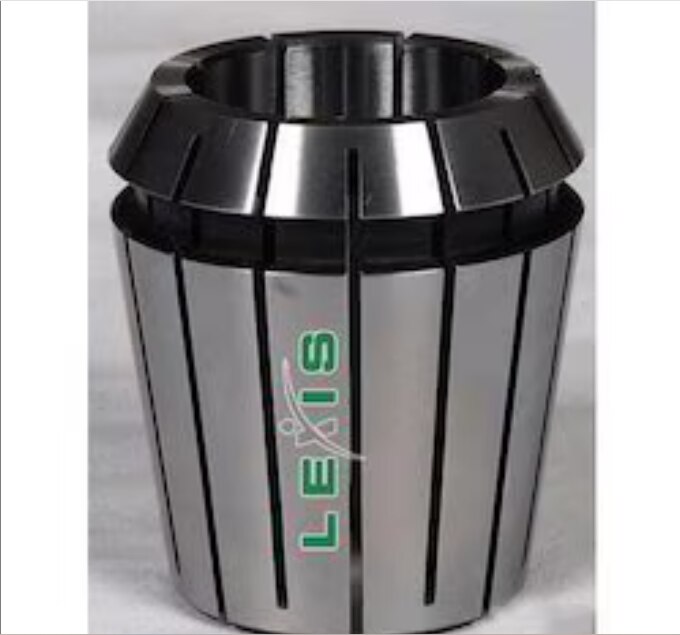
A package labelled “straight shank cutter collet with feed finger” can contain one matched assembly, two separately packed parts, or only a collet unless the quotation defines every item. You will be able to verify the contents, install the parts in the correct order, check fit and runout, and reject a delivery that lacks the dimensions or accessories your machine needs.
Key takeaways
- Treat the collet body as supplied unless the quotation lists the feed finger.
- Match bore, shank, shoulder, nose, and finger dimensions before ordering.
- Install the finger, collet, and cutter without forcing or contaminating contact surfaces.
- Confirm quantities, materials, drawings, and included accessories on the quotation.
What is included in the package, and what must you order separately?
The primary item is the straight shank collet body: a slotted cylindrical body with a specified bore, locating shoulder or nose form, and protective packaging. A feed finger or replaceable gripping insert is included only when the quotation explicitly names it as supplied.
Use the straight shank cutter collet contents and packing list to separate supplied parts from accessories:
- Confirm the collet part number, quantity, nominal bore or gripping range, and whether the collet and feed finger are a matched pair.
- Require the list to identify included retaining or locating parts, such as a stop, insert, identification label, or inspection record.
- Treat the collet nut, holder, spindle adapter, draw tube, stop ring, coolant seal, coolant plug, and machine-specific mounting hardware as separate items unless the packing list says otherwise.
- Check that the packaging protects the slots, bore, shoulder, and nose from impact, corrosion, and embedded debris.
The phrase straight shank cutter collet with feed finger does not by itself define a complete assembly. The collet alone cannot clamp itself; it needs a matching holder, chuck, or spindle adapter to provide location and retention. Get each supplied component and each separately priced accessory named on the quotation before ordering.
What does the feed finger do inside the collet system?
A feed finger for collet systems is a separate workholding or bar-feeding component that pushes or pulls bar stock through the spindle and collet. It transfers feed force and guides the bar; the collet performs the final clamping, axial location, and concentricity control.
The finger sits behind or within the machine’s feeding mechanism, aligned with the bar path. Its interface must match the machine’s:
- Feeder and draw-tube arrangement
- Locating shoulder or stop
- Keyway
- Mounting feature
A loose, short, or misaligned finger can cause bar whip, inconsistent stick-out, and feeder loading errors even when the collet meets its runout specification.
Choose contact geometry for the stock condition. A close, smooth bore suits finished ground or bright-drawn bar and reduces surface marking. Relieved, serrated, or replaceable pads improve traction on oily, peeled, rough, or scale-covered stock, but sharp edges or excessive interference can score the bar and overload the feeder.
The finger is not automatically included with every cutter collet because it matches the feeder and bar diameter, not simply the collet’s nominal diameter. Two collets with equal nominal diameters can require different fingers because their shoulders, keyways, draw-tube interfaces, or mounting features differ. Confirm the finger as a supplied matched component before ordering.
How do you install the finger, collet, and cutter before machining?
Install the feed finger, collet, and cutter in sequence; they perform different jobs in a straight shank cutter collet with feed finger assembly.
1. Isolate the machine and prevent spindle or feeder movement. Clean the holder bore, collet slots, finger contact surfaces, cutter shank, and all locating faces.
2. Inspect each cleaned surface for burrs, dents, corrosion, embedded chips, or raised metal. A single burr can tilt the cutter or prevent uniform collet closure.
3. Mount the feed finger in its feeder or draw-tube interface. Tighten its retaining hardware evenly while keeping the finger coaxial with the spindle and bar path.
4. Move the finger through its full travel by hand or at the permitted setup speed. Stop if it binds, and confirm that its contact face is square to the stock.
5. Fit the collet into the specified holder or chuck, then insert the cutter until it seats against the stated axial stop or finger. Keep the specified insertion depth and minimum clamping length inside the bore.
6. Tighten the collet nut or retention system in the manufacturer’s sequence and torque range. Never use the feed finger as a substitute for collet retention.
7. Check cutter projection, collision clearance, and stop position before closing the machine. Confirm that feed finger machining movement will not contact the cutter or guarding.
8. Measure runout with the fully mounted assembly, using the specified test shank or gauge bar at the stated projection. Connect through-tool or external coolant only when the collet, holder, seals, and machine circuit support it.
Which dimensions prove that the collet and finger will fit?
Fit is proved by a dimensional drawing, not by the phrase “straight shank cutter collet with feed finger.” Ask for these dimensions before approving the quotation:
- Straight shank diameter and usable gripping range
- Collet outside diameter, overall length, nose form, and slot pattern
- Holder or chuck interface, feed-finger bore or contact dimensions, and mounting dimensions
- Cutter length, required projection, and coolant passage arrangement
Keep the cutter within the stated gripping range. Clamping below that range reduces gripping force and concentricity; forcing an oversized shank into the bore can distort the collet and stop its slots closing evenly.
| System | Geometry and interface | When it wins |
|---|---|---|
| Straight shank collet with finger | Straight cylindrical outside form; matching holder, chuck, and finger interface | A machine-specific cutter and feeding assembly |
| ER, DA, or TG | Tapered external geometry with its own nut and holder | ER wins for broad size flexibility |
| 5C | 5C nose and draw tube; not a straight-shank interface | Lathe-style workholding |
| R8 | Located by an R8 spindle taper | Compatible milling spindles |
| Solid tool holder | One fixed shank size without a replaceable slotted collet | Maximum rigidity with one known tool size |
The same nominal shank diameter does not make these systems interchangeable. Confirm the holder’s nose and retention method, then match the finger’s bore or contact face to the bar or cutter, its keyway or shoulder, and its mounting pattern.
A matching diameter with the wrong axial location can cause short gripping length, runout, or feed interference.
What should you inspect on delivery, and what should the quotation confirm?
Reject or quarantine the shipment before installation if any precision surface is damaged. Use this receiving checklist:
- Inspect the collet bore, slots, nose, locating shoulder, threads, and seating surfaces for dents, burrs, corrosion, grinding damage, and embedded chips.
- Check the feed finger for straightness, damaged contact pads, a marked or blocked bore, distorted mounting holes, and damaged alignment features.
- Match every part marking with the purchase order and drawing. Count the collets, fingers, seals, plugs, retaining parts, labels, and inspection records.
- If coolant is specified, check each seal or passage for cuts, blockage, deformation, and the correct port orientation.
- Photograph missing or damaged items before cleaning, fitting, or removing protective packaging.
Ask the seller to put the straight shank cutter collet contents on the quotation: collet series, nominal gripping diameter or range, outside diameter, overall length, nose form, slot pattern, holder interface, feed-finger interface, and mounting dimensions.
Request the dimensional drawing, material and heat-treatment details, runout or concentricity tolerance, stated test method, usable gripping range, and a complete contents list.
The words “with feed finger” must state whether one supplied assembly or two matched parts are being sold together. Before ordering from a cutter collet supplier India, ask LEXIS TOOLING SYSTEMS PRIVATE LIMITED to identify the collet series, finger interface, inspection record, and separately priced accessories.
A vague quotation can leave the holder, coolant plugs, seals, or retaining hardware outside the straight shank cutter collet contents.
Related product
 | Coolant Collet Collet for Straight Shank Cutter We bring in for our clients wide range of collets, which are fabricated using superior quality material procured from reliable vendors. View product → |
Frequently asked questions
What comes with a straight shank cutter collet with feed finger?
The primary item is the slotted straight shank collet body with its specified bore, locating shoulder or nose form, and protective packaging. The feed finger is included only when the quotation explicitly lists it as supplied.
What does the feed finger do in a collet system?
The feed finger is a gripping or locating insert that supports and advances the cutter or workpiece inside the collet system. Its profile must match the cutter and the collet’s internal arrangement.
Which dimensions must you check before ordering?
Check the cutter shank diameter, collet bore, straight shank diameter, locating shoulder or nose dimensions, overall length, and the feed finger’s width, thickness, length, and mounting features.
What should a quotation for a cutter collet confirm?
Ask the supplier to state the collet model, bore size, feed finger inclusion, quantity, material, dimensions or drawing reference, accessories, packaging, and any required cutter details.