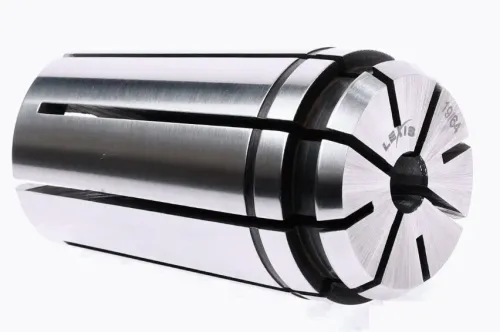


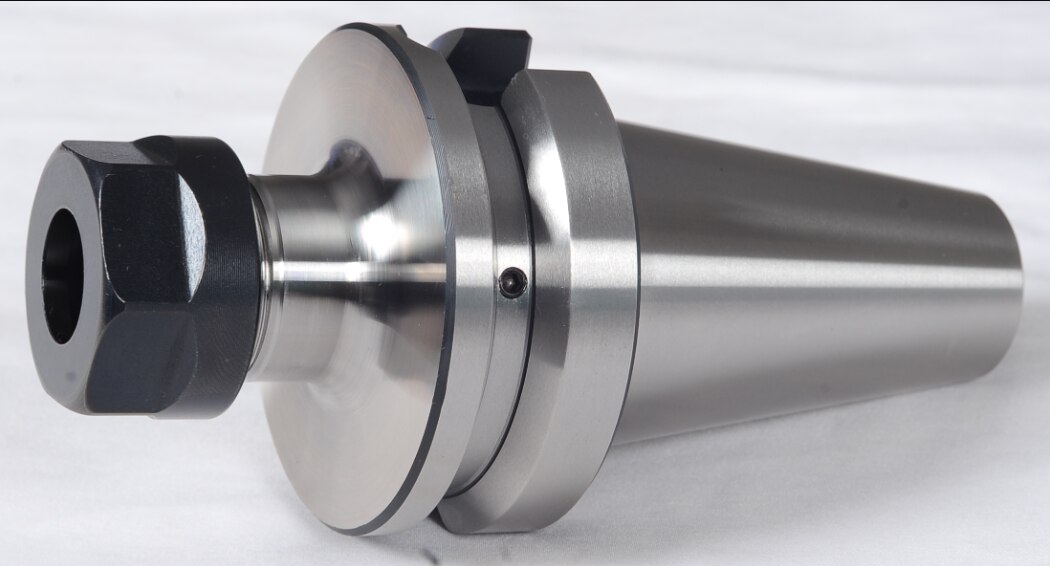
A product title alone does not tell you whether the package contains a fitted collet, clamping nut, pull stud, wrench, or coolant hardware. By checking the interface, assembly, collet data, and purchase documents in the right order, you can identify what is supplied and avoid ordering an incompatible rotating assembly.
Key takeaways
- Request a component-by-component package list, including holder, collet, nut, and accessories.
- Confirm the BT 7/24 taper, flange, drive-key slots, and gauge length.
- Match the Rubberflex collet size and gripping range to your tool shank.
- Ask for drawings, tolerances, runout data, and inspection documents before ordering.
Which parts should be included in the package?
A complete BT short shank holder package must identify each component separately, not rely on the product title. The holder body should show its 7/24 BT taper, flange, drive-key slots, threaded collet-chuck bore, and short gauge length.
“With Rubberflex collet” does not prove that the collet is fitted, included as one selected size, or available only as an optional line item.
- Rubberflex collet: specify the collet series and nominal bore.
- Matching clamping nut or compression mechanism: confirm the exact locating and retention method.
- Sealing ring, coolant tube, coolant plug, or through-spindle coolant component: list each part because a BT taper alone does not provide coolant-through-tool delivery.
- Machine-side pull stud: quote it separately; its thread and geometry must match the spindle.
- Wrench, protective cap, balancing certificate, inspection report, dimensional drawing, and care instructions: confirm each as included, optional, or excluded.
| Item | Required quotation detail | Why it must be separate |
|---|---|---|
| Holder body | BT30, BT40, or BT50; gauge length | Confirms machine fit and usable projection |
| Rubberflex collet | Series and nominal bore | A diameter-only description is inadequate |
| Nut or compression mechanism | Matching type and torque | ER, OZ, TG, and standard milling collets are not substitutes |
| Pull stud | Spindle thread and geometry | The holder does not automatically include it |
| Balance documentation | Certificate and test speed | Establishes whether balance covers the holder or assembly |
Require a packing list naming the holder taper, collet series, nominal bore, nut, wrench, pull stud, and balance documentation. Also request the inspection report, dimensional drawing, protective cap, and care instructions.
How does the BT interface and short shank affect the fit?
A bt short shank holder with rubberflex collet fits only when the machine and holder share the exact taper designation: BT30, BT40, or BT50. “BT” alone is insufficient. Before ordering, compare the spindle face, flange diameter and contact surface, drive-key arrangement, pull-stud thread and geometry, 7/24 taper angle, and the holder drawing.
Gauge length is the distance from the spindle face to the collet nose, not the holder’s overall catalog length. Request both figures, then confirm the usable projection and the required tool gauge length. Do not assume that “short shank” means every tool will fit.
Short shank versus conventional BT holder:
| Feature | Short shank | Conventional BT holder |
|---|---|---|
| Gauge length | Shorter spindle-face-to-collet distance | Longer distance |
| Access and rigidity | Improves clearance, reduces projection, and increases rigidity | Provides more tool reach but adds projection |
| Cutting-tool length | Leaves less usable tool length | Accepts more available tool length |
| Clearance risk | Can interfere with the spindle nose, fixture, or workpiece | Can clear the workpiece while projecting farther |
Inspect the interface before installation. Remove chips and check for fretting or brinelling on the taper and flange, damaged drive keys, poor flange contact, and a marked pull-stud seat. Check the collet bore as well. Any defect can create axial and radial error even when BT30, BT40, or BT50 is correct.
How is the Rubberflex collet installed and specified?
Insert the straight-shank tool into the collet, seat the collet in the specified nut or locating mechanism, place that assembly in the holder, thread the nut onto the holder, and tighten it with the specified wrench and torque.
An ER nut, impact wrench, or tightening the collet outside the holder is not an acceptable substitute; each can damage the elastomer support or produce inaccurate seating.
Confirm these figures for the Rubberflex collet for BT holder:
- Collet series, nominal bore, permitted clamping range, and recommended stock allowance.
- Minimum gripping length, outside diameter, axial length, and material or elastomer specification.
- Temperature limits, chemical limits, and maximum permissible speed.
- Runout limit, measurement location, test bar or gauge pin, and projection used for the measurement.
- Balance grade, including whether it applies to the bare holder or complete holder-collet-nut assembly.
- The stated capacity is not automatically a full-range specification. Gripping near either range limit can change holding force and runout, so verify those values before process approval.
| Balance confirmation | What to request | Why it matters |
|---|---|---|
| Bare holder | Balance grade and test rpm | Does not establish complete assembly balance |
| Complete assembly | Balance grade for holder, collet, and nut, plus test rpm | Reflects the supplied rotating combination |
What should you compare before choosing this assembly?
Compare the assembly against the tool, spindle speed, projection, and machining operation—not diameter alone. A Rubberflex system uses an elastomer-supported segmented collet; an ER collet uses a thin slotted spring construction. Equal nominal bores do not establish interchangeability.
| Option | Gripping and changeover | Runout, damping, access, speed and coolant |
|---|---|---|
| Rubberflex | Compliant grip across its specified range; quick nut-based changes | Added damping and gripping compliance; confirm gauge length, speed limit, coolant compatibility and passage |
| ER | Flexible range within each collet size; quick changes | Proven general-purpose choice; less compliant support and possible greater projection |
| Hydraulic chuck | Fast changes with the specified shank | Low runout, compact access; requires the hydraulic mechanism and approved tool shank |
| Shrink-fit holder | One tool diameter per bore; slower changes | Compact access and strong concentricity; needs heating equipment and suitable tool material |
| Solid end-mill holder | Grips a matching Weldon flat; limited diameter flexibility | Rigid positive drive; projection and access depend on the holder, not a collet |
Rubberflex compliance can improve damping, but it makes temperature limits, coolant chemistry, storage condition, and replacement guidance part of the selection. Confirm the collet’s elastomer specification and maximum speed before qualification.
BT taper presence does not prove through-tool coolant. Check for the correct internal passage, seal, coolant tube, pull stud, and spindle interface; external coolant is a different configuration. Reject any option whose gauge length, tool diameter, projection, or speed rating does not suit the actual cut.
What must you request from a supplier before placing the order?
Compare a BT holder distributor India listing with a Rubberflex collet supplier quotation only after confirming the exact assembly, not just the product title. Request the following in writing:
1. BT30, BT40, or BT50 designation; dimensional drawing; gauge length; flange and drive-key dimensions; pull-stud thread and geometry; coolant configuration; holder material; collet series; nominal bore and clamping range; nut type; tightening torque; maximum speed; runout test location, test pin, and projection; balance grade and test rpm.
2. An inspection certificate, warranty terms, and replacement availability for both holder and collet. Ask whether every item is local stock or an import, and require a stated lead time for imports. The balance certificate must identify whether it covers the bare holder or complete holder-collet-nut assembly.
3. A packing list that marks each component as included, optional, or excluded. Confirm the Rubberflex collet is fitted, supplied as one selected size, or quoted separately; a diameter-only quotation is inadequate.
LEXIS TOOLING SYSTEMS PRIVATE LIMITED belongs in the comparison when it supplies these documents for the specified assembly rather than only a product title. Choose on verified interfaces, process requirements, complete contents, and replacement support.
Write the purchase order to name: BT holder, Rubberflex collet, nut, wrench, pull stud, coolant parts, protective cap, inspection report, and balancing certificate. Also state the exact dimensions, torque, speed, balance rpm, stock status, and delivery date.
Related products
 | Precision Turned Components Product Price :Get Latest Price BT Short Shank Holder we offer these kind of product. we are the leading manufacturer of BT Short Shank Holder. View product → |
 | Precision Turned Components Collet Holder View product → |
Frequently asked questions
Which parts should be included with a BT short shank holder and Rubberflex collet?
Ask the supplier to identify the holder body, Rubberflex collet, collet nut, and any required wrench, retention accessories, or protective components separately. Do not treat the product title as a complete packing list.
How do the BT interface and short shank affect fit?
Check the holder’s 7/24 BT taper, flange dimensions, drive-key slots, threaded collet-chuck bore, and short gauge length against your machine spindle and tooling setup. A matching taper alone does not confirm correct flange or drive-key engagement.
How is the Rubberflex collet installed and specified?
Install the collet in the specified nut and holder arrangement, then tighten it using the supplier’s stated method and torque information. Specify the collet type, nominal size, gripping range, tool-shank diameter, and required runout.
What should you request from a supplier before placing the order?
Request a component list, dimensional drawing, interface standard, collet size and range, runout specification, material or heat-treatment details, inspection report, and confirmation of compatibility with your machine.