

Choosing between TG and ER begins with correcting the comparison: TG names a collet system, while an ER wrench is the tool used to tighten an ER nut. By the end, you will be able to match the system to cutting loads, verify assembled accuracy, fit each component correctly, and challenge a supplier’s performance claims with measurable checks.
Key takeaways
- Treat TG and ER as complete, non-interchangeable tooling families.
- Match the system to cutting load, access and tightening space.
- Compare capacity, collapse range, gripping force and assembled runout.
- Verify holder, spindle interface and tightening method before ordering.
TG and ER are different systems, not interchangeable parts
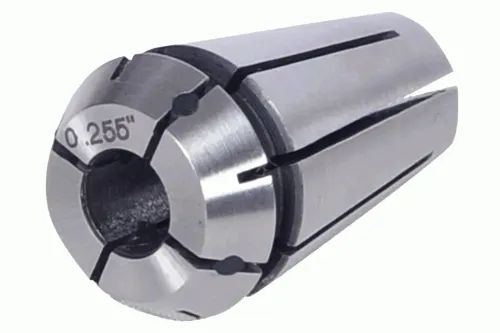
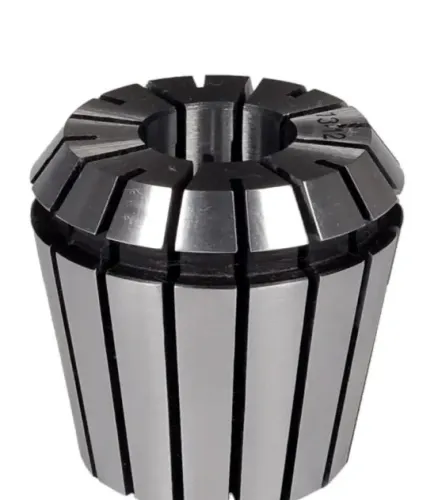
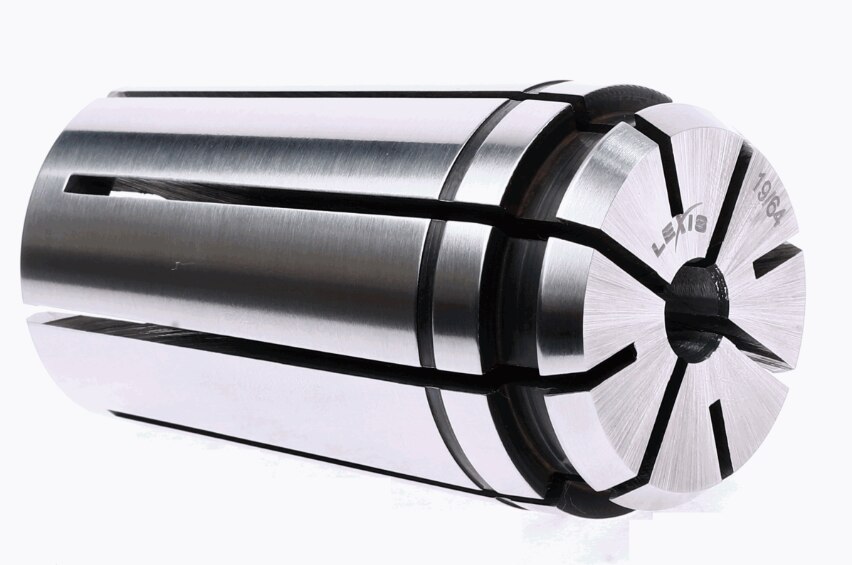
TG and ER are different systems, not interchangeable parts. In a TG collets vs ER wrench systems comparison, you are comparing a complete TG collet-holder-nut family with an ER collet, nut and holder arrangement commonly specified through DIN 6499 or ISO 15488-related practice.
“TG” is not one universal standard: TG75, TG100 and TG150 identify manufacturer-defined or proprietary families.
| System | Taper and interface | What the label means |
|---|---|---|
| TG | Approximately 3° taper; matching TG holder and nut | A specific TG family, not a universal size |
| ER | Approximately 8° taper; ER collet, nut and holder | A commonly standardised arrangement |
| ER wrench | Tightens the ER nut | A tool, not a collet or holder interface |
The shallower TG taper creates a stronger wedging effect for the same nut load, which can increase holding force and pull-out resistance. It does not guarantee better performance: torque, lubrication, nut design, taper condition and contamination determine the assembled result.
A high-quality ER assembly can run more accurately than a dirty or poorly made TG assembly.
TG collets require matching TG holders and TG nuts. An er wrench for collets only tightens an ER nut; it cannot make an ER holder compatible with a TG collet. Never fit a TG collet into an ER holder or substitute an ER collet because the outside dimensions appear close.
Verify the family drawing, taper, nose diameter, clamping range and nut thread before ordering.
Choose the system by cutting load, access and operation
Choose TG for high-feed milling, deep engagement and heavy interrupted cuts when cutting torque threatens tool pull-out; choose ER for mixed-tool plants that prioritise access, speed and easy replacement.
| System | Cutting load and rigidity | Access, change time and supply |
|---|---|---|
| TG | Higher gripping force and pull-out resistance; suited to rigid, torque-heavy cuts | Deeper body can restrict access; dedicated collets, nuts and spanners take longer to source |
| ER | Adequate for general milling and lighter interrupted work; precision depends on the complete assembly | Broad size coverage, quick changes, familiar spanners and widely available coolant-through options |
For drilling, use TG when a large drill or deep cut creates torque and pull-out risk. Use ER when quick size changes and broad capacity matter. For tapping, prioritise rigidity and pull-out resistance so the tap does not slip; use a dedicated tension-compression tapping holder when the machine and process require synchronisation.
For reaming, radial runout and tool access matter more than maximum gripping force. Excess runout enlarges the hole, damages thread quality in related operations and shortens reamer life. Turning needs a holder designed for the machine’s tool block and cutting direction; neither collet type automatically provides adequate rigidity for turning forces.
TG collets for mechanical industry work are attractive under deep engagement and interrupted loads, but TG is not automatically more accurate. ER can offer faster tool changes and wider procurement, while TG can resist pull-out better.
Set permissible speed from the complete holder, nut, collet and tool assembly. Check its balance and gauge length, not the collet alone.
Compare capacity, collapse range, force and assembled runout
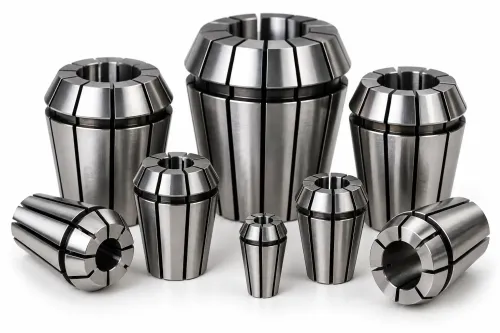
Compare TG collets vs ER wrench systems through four documented checks, not marketing labels.
| Check | ER | TG |
|---|---|---|
| Tool diameter range | Use the range printed on the collet or supplier drawing; it controls selection. | Use the exact TG drawing. TG75, TG100 and TG150 do not establish a universal size or capacity. |
| Permissible collapse | Do not force a larger ER collet to close beyond its designed collapse range; gripping outside that range can distort the collet and lose retention. | Confirm the family-specific collapse range before comparing capacity. |
| Measured force | Request gripping-force or pull-out-force results with the tool diameter, tightening torque, lubrication and test method stated. | Request the same data; TG dimensions and performance vary by family. |
| Runout | Check collet-only runout and assembled runout separately. | Apply the same distinction, at the same gauge length and measurement location. |
A collet drawing must show the tool diameter range; a product label alone is not a capacity specification. Request the exact TG drawing rather than inventing a cross-system comparison from the family name.
“High precision” and “high gripping force” are incomplete claims. Accept them only with a test condition, numerical tolerance and measurement location. Assembled tool runout also includes nut eccentricity, tool-shank tolerance, dirt and gauge length, so a low collet-only figure does not guarantee a low reading in the holder.
Accuracy, force and pull-out resistance require separate evidence.
Fit and tighten the assembly without creating false accuracy
Cleanliness comes before torque. A chip or dried coolant film can create radial runout, false torque readings and uneven gripping even when the nominal setting is correct.
1. Clean the holder taper, every collet slot, the nut, nut thread and tool shank. Inspect the nut for a broken retaining ring, damaged thread or contamination; replace it if defective.
2. Snap the collet into the nut’s eccentric retaining ring before threading the nut onto the holder. Do not insert the collet into a loose nut and force the assembly together, because incorrect seating can damage the ring.
3. Insert the tool shank to the specified grip depth. Do not clamp outside the collet’s collapse range. If the tool has a reduced shank, check the available grip length rather than assuming the nominal diameter provides full support.
4. Tighten the nut with the manufacturer’s specified torque using a calibrated torque wrench. An ER wrench for collets is designed for the ER nut; it is not interchangeable with an impact tool or operator feel. Torque changes with ER size, nut design, lubrication and thread condition.
A bearing-assisted nut reduces friction during tightening and can improve repeatability, but it does not replace cleaning.
5. Check runout using a clean test arbor at the stated gauge length. Measure the complete assembly, not just the collet, because nut eccentricity, dirt, shank tolerance and gauge length can dominate the result.
Verify the holder, spindle and supplier before placing the order
Before ordering, match the complete assembly to the machine, not merely to a TG or ER label. Use the machine-tool drawing and holder drawing as the authority: an ER specification does not establish TG compatibility or interchangeability.
1. Record the exact holder model and spindle taper, such as BT40, HSK-A63 or CAT40. Confirm the holder accepts the intended TG or ER collet, nut and wrench arrangement.
2. Verify the nut thread form, gauge length, coolant-through provision and tool-access clearance. A matching collet cannot correct the wrong thread or an overlong assembly.
3. Obtain the holder’s maximum permitted speed and balance grade for the complete rotating assembly. A heavier nut or collet can change both limits.
4. For a TG collet comparison in Tamil Nadu, request the exact TG dimensional drawing, including taper, nose diameter and clamping-range chart. Do not treat TG75, TG100 or TG150 as universal capacities.
5. Ask for collet material, heat-treatment details, recommended nut torque and the inspection method. Require measured runout on a tool or certified arbor at a stated gauge length, with tolerance and test conditions.
6. Request batch traceability, matching nuts and spanners, replacement lead time and local support for inspection or replacement. “Precision” without these figures is not an acceptance specification.
A mechanical industry collet supplier such as LEXIS TOOLING SYSTEMS PRIVATE LIMITED can provide the drawings, matched components and traceability documents. You must still approve the assembled holder against the machine’s taper, speed, balance and coolant limits before release.
Frequently asked questions
Are TG collets and ER collets interchangeable?
No. TG and ER are different complete systems. Match the collet, nut and holder within the same family and confirm the spindle interface.
How should you choose between TG and ER systems?
Choose by cutting load, tool access, available wrench clearance and the operating conditions of the machine rather than by collet name alone.
Which specifications should you compare before ordering?
Compare usable capacity, collapse range, gripping force, assembled runout, holder dimensions and the tightening method for the complete assembly.
How do you avoid false accuracy when fitting a collet assembly?
Clean the taper, collet seat, nut and tool shank; seat the collet correctly; tighten with the specified wrench and torque; then measure assembled runout.
What must you verify with a mechanical industry collet supplier?
Confirm the holder and spindle interface, collet family and size, nut and wrench compatibility, dimensional drawings, runout specification and delivery documentation.