

A drill collet quotation is incomplete when it names only ER11, ER16, ER40 or “coolant” without stating the bore range, sealing arrangement, pressure limit and matched nut. You will be able to compare those specifications, select a collet for a straight drill shank, and request the drawings and inspection evidence needed before ordering in Kinathukidavu.
Key takeaways
- Match the drill shank diameter to the collet’s usable clamping range.
- Request coolant pressure, sealing method, runout and maximum rpm in writing.
- Confirm whether the ER16 collet uses through-coolant or external coolant delivery.
- Test runout and coolant leakage after installation before cutting.
Which specifications belong on an ER drill-collet quotation?
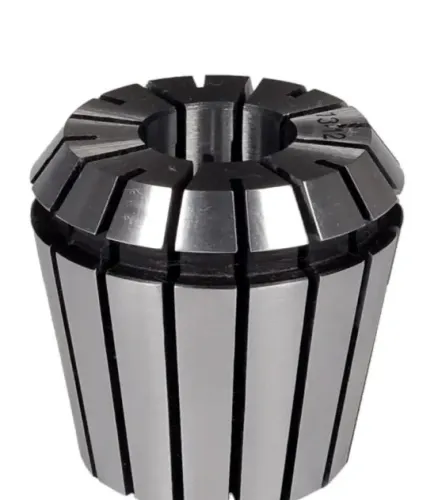
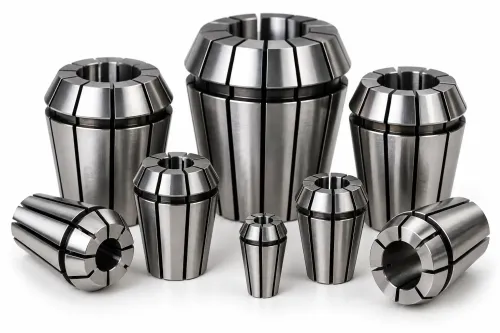
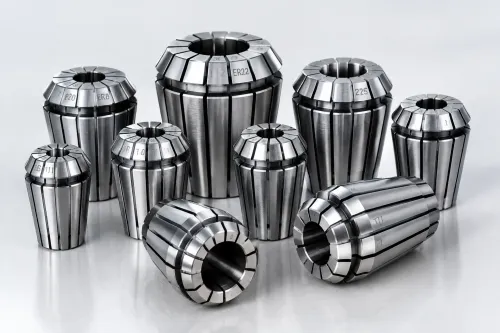
Request the ER size, usable bore range, coolant path, runout, maximum rpm, pressure rating and applicable standard before comparing prices. “Drill collets specifications in kinathukidavu” should identify the technical data, not merely the supplier’s location or the phrase “ER coolant collet.”
Ask for these quotation details:
- ER designation, such as ER11, ER16, ER20, ER40 or ER50, plus DIN 6499 or ISO 15488 reference and tolerance class.
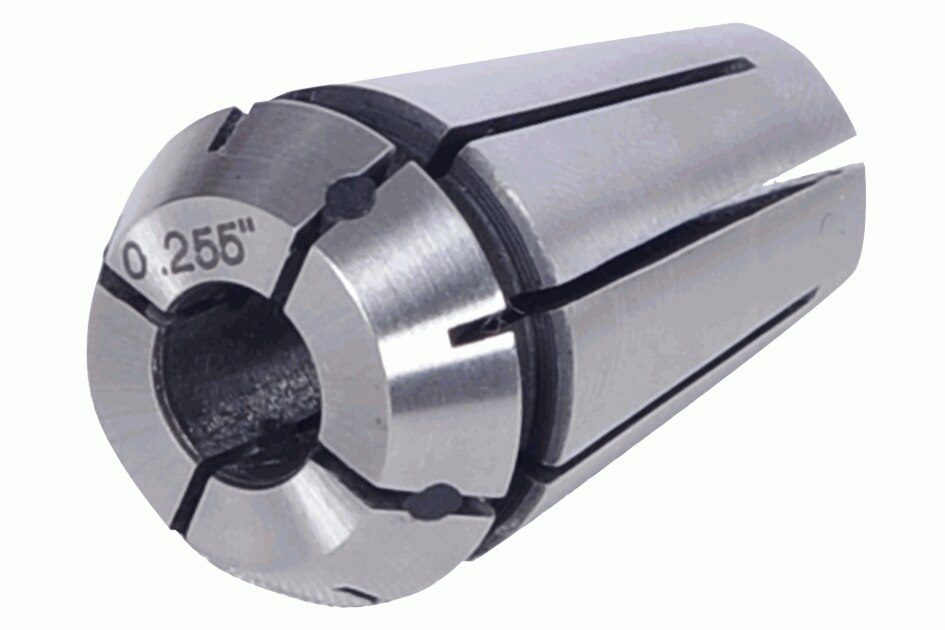
- Minimum and maximum drill-shank diameter, with range marking that matches the collet.
- Dimensional drawing showing nose, taper, body, thread, length, outside diameter and bore.
- Coolant route, sealing method, working pressure and compatible sealing nut.
- Maximum rpm, specified assembled runout and the inspection method or acceptance limit.
- Compatible holder, spindle, nut designation and the required tightening torque for that exact nut and collet.
- Material, heat treatment and an inspection report or certificate.
Compare coolant claims against the actual design:
| Option | What the quotation must identify | What it means |
|---|---|---|
| Radial passages | Hole or passage layout and pressure limit | Coolant exits around the collet; it is not automatically sealed through-tool delivery |
| Sealed through-tool | Sealing nut, shank closure and pressure rating | Coolant travels through the holder and drill into the tool |
| Unspecified “coolant” | No defined path, seal or pressure figure | Do not assume compatibility or reliable sealing |
Check the drill shank against the marked range. A smaller shank forced into an oversized range creates uneven contact, runout and leakage. “Made to DIN” alone does not prove pressure capability, precision or nut interchangeability.
How do ER11 and ER16 bore ranges affect drill selection?
Match the collet to the drill’s measured shank diameter, not its cutting diameter or the ER family’s largest bore. ER11 commonly covers about 0.5–7 mm, while ER16 commonly covers about 1–10 mm; use the catalogue range for the specific coolant collet because manufacturers may omit part of the nominal family range.
| Collet | Shank selection | Main risk |
|---|---|---|
| ER11 | Select a collet whose marked range contains the measured shank | Smaller nut and bore limit tool diameter, gripping length, coolant flow and speed |
| ER16 | Select a collet whose marked range contains the measured shank | Do not assume every ER16 coolant model reaches 10 mm |
A 3.0 mm drill must not go into an ER11 or ER16 collet whose stated minimum is above 3.0 mm. Forcing that fit over-collapses the slots, produces uneven contact and increases runout; it can also prevent reliable coolant sealing.
The er 11 coolant collet details should state the usable bore range, runout, maximum speed and compatible nut. The er 16 coolant collet specifications should also identify whether coolant travels through radial holes or a sealed through-tool path.
For sealed delivery, check the nut, holder and drill shank together. A collet with coolant passages alone does not guarantee through-tool flow; the shank must close the coolant path and the sealing nut must match. Verify the applicable DIN 6499 or ISO 15488 designation before treating the assembly as interchangeable.
What do ER40 coolant options require for pressure, sealing and speed?
Pressure rating alone does not prove through-tool coolant capability. Compare er 40 coolant collet options by tracing the complete coolant route: holder, matched nut, collet, sealing contact and drill shank. A collet with radial holes or open passages can spray coolant around the tool while leaving the drill’s internal channel dry.
| Specification | Through-tool coolant option | Limited coolant-passage option |
|---|---|---|
| Coolant route | Sealed path into a hollow or internally cooled tool | Radial holes or passages discharge coolant near the shank |
| Nut | Matched sealed or coolant-specific nut | Standard slotted nut may leak through unused slots |
| Tool requirement | Shank geometry must close the sealing area and align with the internal channel | Tool receives external or collar-area coolant |
| Pressure entry | Stated maximum working pressure in bar for the assembled system | Collet passage rating alone, or no pressure rating |
| Speed entry | Maximum rpm for the collet, nut and holder assembly | Maximum rpm still applies; open leakage does not raise it |
Request the pressure rating for the assembled collet-and-nut combination, not just the collet body. Ask for the maximum rpm of the ER40 collet, matched nut and holder together; the lowest assembly limit overrides the spindle’s no-load speed, especially with the larger ER40 nut and rotating mass.
Reject a through-tool claim if the drill has an undersize shank, relief, flat or rear geometry that bypasses the seal. Confirm the ER40 bore range, sealing diameter, compatible nut and holder designation before ordering.
How should you install and test a coolant drill collet?
Install it as a matched assembly and judge it by the assembled tool’s runout, not by the loose collet alone.
- Confirm the drill has a straight, cylindrical shank with the specified diameter, surface condition and length. Keep the diameter inside that collet’s marked clamping range; forcing a smaller shank into an ER collet causes uneven contact, slot distortion, higher runout and poor coolant sealing.
- Match the collet to the holder designation and select the compatible coolant or sealing nut. A standard slotted ER nut can leak through unused slots, while a sealed nut can require a specific shank, pressure limit and torque.
- Clean the holder taper, collet bore, nut seat and drill shank before assembly. One chip between mating surfaces can tilt the drill, increase cutting load and defeat a low-runout collet.
- Insert the collet fully into the nut before engaging the holder, then tighten with the specified spanner and a calibrated torque wrench. Use the collet or nut maker’s torque for that exact size and nut type; apply thread lubricant only when its instructions require it.
- Measure runout with the drill installed at the actual gauge length. Check near the collet nose and near the cutting end, then verify coolant flow at the intended pressure.
The reading reflects the holder taper, nut, collet, shank condition, cleanliness and drill straightness together. Excessive runout produces unequal hole size, poor surface finish, wandering, uneven coolant delivery and premature drill wear.
What should you verify with a drill-collet supplier in Tamil Nadu?
Before paying, require evidence that the ER coolant collet matches your holder, nut and drill shank—not merely a claim that it is “made to DIN.” For a machine in Kinathukidavu, ask the drill collet supplier in Tamil Nadu to identify the exact ER size, applicable DIN 6499 or ISO 15488 standard, tolerance class and usable bore range.
Ask for:
- A dimensional drawing showing bore, nose diameter, body diameter, length, taper and acceptance tolerances.
- Range marking or catalogue data proving the drill shank falls within the collet’s stated clamping range.
- A coolant-path drawing identifying radial passages versus sealed through-tool delivery, plus the required sealing nut and shank geometry.
- The tested coolant-pressure limit, maximum rpm, compatible nut designation and holder interface.
- Material grade, heat-treatment details and a dated inspection report or certificate.
- Runout results, with the gauge length and measuring method stated.
| Supplier statement | Evidence to request | Why it matters |
|---|---|---|
| ER coolant collet | Coolant-path drawing and pressure rating | “Coolant” may mean passages, not a sealed circuit |
| Low runout | Assembled holder-and-tool measurement | A loose-collet result ignores the nut, taper and shank |
| DIN-compatible | DIN 6499 or ISO 15488 designation and nut type | The claim alone does not prove interchangeability |
Ask LEXIS TOOLING SYSTEMS PRIVATE LIMITED for the same drawing, pressure data and inspection method you request from competing suppliers. Reject any quotation that omits the collet range, coolant sealing method or measurable acceptance result.
Related products
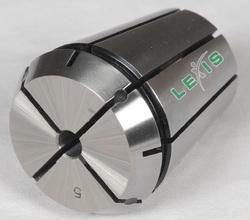 | Precision Turned Components ER Coolant Collet - Sealed Collet Precision Turned Components - ER Coolant Collet - Sealed Collet Product Price :Get Latest Price ER Coolant Collet Our organization is also involved... View product → |
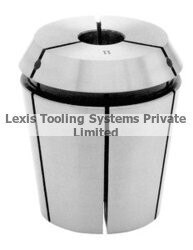 | Coolant Collet Product Price :Get Latest Price As we are considered one of the leading companies, our company is also engaged in manufacturing, supplying and... View product → |
Frequently asked questions
Which specifications belong on an ER drill-collet quotation?
State the ER size, usable bore range, drill shank diameter, coolant path, runout limit, maximum rpm, pressure rating, sealing method and applicable standard.
How do ER11 and ER16 bore ranges affect drill selection?
Choose the collet from the drill’s actual shank diameter and the supplier’s stated clamping range. Do not select by ER size alone, because ER11 and ER16 cover different tool-size ranges.
What do ER40 coolant options require for pressure, sealing and speed?
Ask for the rated coolant pressure, sealing arrangement, leakage limits and maximum permitted rpm. Confirm that these values apply to the exact ER40 coolant collet and holder combination.
How should you install and test a coolant drill collet?
Clean the taper, collet slots, nut and drill shank; seat the collet correctly in the nut; tighten to the specified torque; then measure runout and check for coolant leakage at the intended pressure.
What should you verify with a drill-collet supplier in Tamil Nadu?
Request a dimensional drawing, bore-range chart, runout specification, material or heat-treatment details, coolant-pressure and rpm limits, inspection report and applicable standard.
Related items
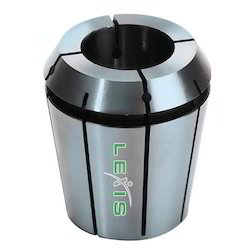 | Coolant Collet Knowing us as a well known organization, we are engaged in manufacturing, supplying and exporting an extensive range of ER 20 Coolant collet. View product → |
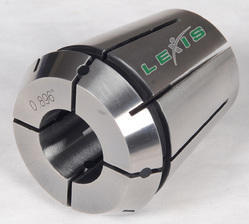 | Coolant Collet ER 11 Coolant Collet With our firm commitment to quality, we are engaged in manufacturing, supplying and exporting a wide range of ER 11 Coolant... View product → |
ER Collets ER20 Collet system also known as RD20 Collet system are standardized and manufactured as per DIN 6499 standard guidelines and are truly... View service → |
ER Collets ER25 Collet system also known as RD25 Collet system are standardized and manufactured as per DIN 6499 standard guidelines and are truly... View service → |