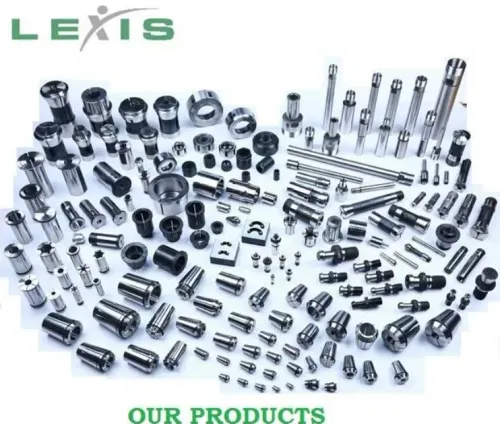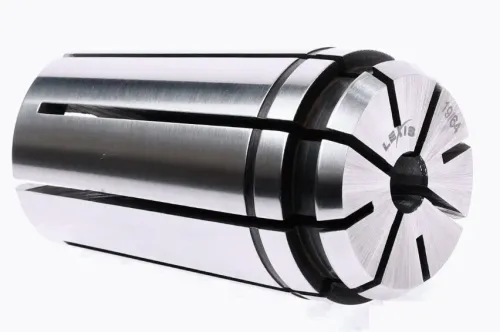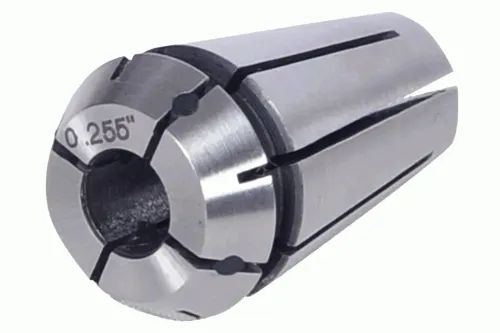


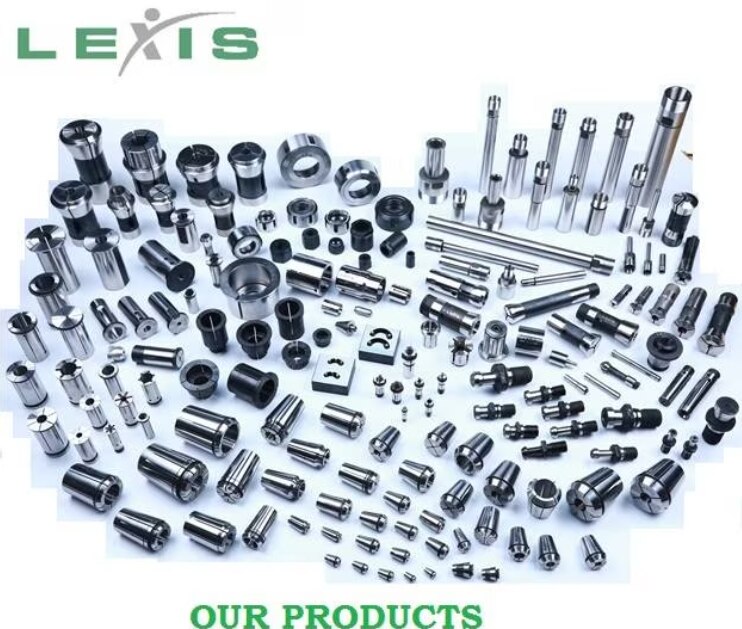
A sliding-head collet cannot be identified safely by a diameter label alone: the machine model, collet station, closing interface, nose geometry, and bar form all affect fit. By the end, you will have a specification checklist, dimensional table, compatibility test, and machine collet order format suitable for requesting a verified quotation.
Key takeaways
- Name the spindle or guide-bush station before specifying collet size.
- Use the machine drawing for nose form, length, thread, and locating dimensions.
- State nominal bore, clamping range, bar tolerance, and required runout separately.
- Include material, application, inspection method, and acceptance limits in the order.
Identify the Collet Station Before You Name the Size
Name the machine station before you name the bore: a sliding-head machine uses one collet in the main spindle to grip the bar and another at the guide bush to support it beside the cutting tool. Matching the nominal diameter alone can put the wrong collet in the wrong station.
| Collet family | Station or function | What identifies it |
|---|---|---|
| Sliding-head or Swiss-type | Main spindle or guide-bush station | Machine make, exact model, nose form, drawtube connection, and fixed or rotating guide bush |
| ER, DIN 6499 | General-purpose tool holding | Standardized taper and nut system; not a drop-in Swiss-machine replacement |
| TG | High-grip tool holding | TG taper and matching nut; intended for compatible tool-holding bodies |
| Traub | Machine-specific turning equipment | Original machine series, collet marking, and proprietary geometry |
| Fixed-head lathe | Stationary spindle workholding | Lathe spindle nose, closer, length, keyway, and rear profile |
For sliding head collets for specifications in Kinathukidu, identify the station before requesting sliding head collet sizes:
1. State the machine maker, exact model, spindle capacity, and collet family or series.
2. Send the nameplate, spindle and guide-bush photographs, existing collet markings, and a dimensioned drawing.
3. Confirm the collet nose geometry, outside diameter, overall length, rear profile, keyway, and thread or drawtube connection.
4. Describe the sample bar and state whether the guide bush is fixed or rotating. Clean the taper, draw-in surfaces, closer, and guide-bush seat before checking fit or runout; chips can make a correct collet appear defective.
Build the Dimensional Specification Around the Machine Drawing
A replacement collet fits only when its machine interface and locating dimensions match the drawing, not merely when its bore matches the bar. State the machine maker, exact model, spindle or guide-bush station, fixed or rotating guide bush, collet-family marking, and original part number.
The main spindle collet grips the bar during cutting; a guide-bush collet supports it near the tool, so the two are not interchangeable.
Send the supplier:
- A dimensioned drawing or a clear measurement of the existing collet
- Spindle nose diameter, collet nose form, and nose angle
- Overall length, locating shoulder position, and rear profile
- Drawtube or closer thread, taper, and engagement length
- Keyway, drive slot, or anti-rotation feature
- Outside diameter and any clearance diameter inside the spindle
- Bar diameter and the machine’s stated capacity
Record these machine collet specifications on the purchase request:
| Dimension | What to specify | Why it proves fit |
|---|---|---|
| Bore | Nominal diameter and tolerance | Confirms the intended bar size |
| Outside diameter | Maximum body diameter | Prevents spindle interference |
| Overall length | Front face to rear end | Establishes axial seating |
| Nose geometry | Diameter, angle, and profile | Matches the spindle nose |
| Locating shoulder | Diameter and axial position | Controls repeatable location |
| Rear interface | Thread, taper, or drawtube connection | Confirms closing engagement |
| Drive feature | Keyway or anti-rotation form | Prevents collet rotation |
| Tolerance class | Bore, runout, and form limits | Defines acceptance |
Catalogue sliding head collet sizes alone cannot prove compatibility; two collets with the same nominal bore can have different noses, lengths, or closer interfaces.
Separate Nominal Bore, Clamping Range, and Bar Tolerance
State the nominal bore as the target bar dimension, then state the actual clamping range separately. A collet marked 12 mm does not automatically grip every bar below 12 mm; excessive collapse can reduce contact, increase runout, mark the stock, or let it pull during feeding.
Specify each bar form like this:
- Round: finished diameter, acceptable diameter tolerance, surface condition, and required contact along the gripping length.
- Hexagonal: across-flats dimension and tolerance, corner radius, orientation requirement, and whether all six faces must contact.
- Square: across-flats dimension and tolerance, corner radius, orientation to the machine, and the minimum face contact required.
- Irregular or profiled: attach a dimensioned cross-section showing maximum and minimum dimensions, locating faces, orientation, and areas that must not be contacted.
Describe the material condition because drawn, ground, rolled, hollow, hardened, or oily stock changes gripping performance. Include bar straightness and surface finish when feeding through a guide bush; a collet cannot correct bent stock or heavy scale.
Your machine collet specifications should therefore show nominal bore, permitted bar range, and bar tolerance as separate fields. Confirm that range against the spindle capacity, guide-bush bore, clearance, and remnant-handling space. The catalogue’s sliding head collet sizes are not enough if the machine cannot feed that diameter.
For non-round stock, request a bore geometry made for the profile. A round bore concentrates force on hexagon corners or irregular high spots, producing poor repeatability and marking.
Specify Runout, Application, Material, and Acceptance Testing
Define runout as a measured limit, not as “precision.” State the maximum radial runout, the gauge position from the collet nose, and the instrument and test bar used. A catalogue claim such as 1 mm collapse describes movement, not accuracy, repeatability, gripping force, or performance during cutting.
Include these machine collet specifications in the purchase request:
- Application: representative bar material, diameter, shape, surface condition, feed rate, and cutting load. State whether the collet must grip round, hexagonal, square, or profiled stock.
- Runout: maximum allowed value at the agreed gauge position, measured with a calibrated test bar or the production bar. Measure again after unclamping and reclamping to establish repeatability.
- Material: hardened tool steel for general work; carbide-lined or carbide-insert construction for abrasive material or long runs. Choose carbide with care because impact, chips, and misalignment can damage it.
- Acceptance: clean the collet, spindle taper, draw-in surfaces, closer, and guide-bush seat before testing. Reject the collet if it exceeds the runout limit, marks the representative bar, or allows slip under the intended cutting load.
Request an inspection certificate showing the recorded results, not merely a conformity statement. Identify whether the collet is new or reconditioned, and require replacement terms for a failed acceptance test. A clean, repeatable test separates collet defects from chips or coolant contamination that would otherwise distort the result.
Send a Quote-Ready Machine Collet Order to a Tamil Nadu Supplier
A quote-ready request gives a sliding head collet supplier in Tamil Nadu enough evidence to verify fit, performance, and delivery. “20 mm collet, quantity 20” does not identify the correct dimensional family.
1. State the machine make and exact model, main spindle or guide-bush station, fixed or rotating guide bush, collet nose form, drawtube or closer connection, and original collet marking.
2. Attach the machine nameplate, spindle and guide-bush photographs, existing-collet markings, dimensioned drawing or reference part number, and a sample-bar description. These records prevent an equivalent-looking catalogue collet from being quoted for the wrong station.
3. Give the actual bar diameter, acceptable bar tolerance, material condition, and profile: round, hexagonal, square, or profiled. State the target runout at the gripping length, plus required material grade and hardness.
4. Specify quantity and condition: new manufacture or regrind. Add the inspection-certificate requirement and ask whether the quotation includes inspection, packing, freight, delivery to Kinathukidavu, and replacement terms.
5. Put all machine collet order details in one purchase request, including photographs and the drawing file name. LEXIS TOOLING SYSTEMS PRIVATE LIMITED can then compare the requested machine geometry with the supplied reference instead of treating nominal bore alone as proof of compatibility.
Ask the supplier to confirm the quoted collet’s outside diameter, overall length, rear profile, keyway or drive features, and usable gripping range before issuing the purchase order.
Frequently asked questions
Why must you identify the collet station before naming its size?
A sliding-head machine uses a main-spindle collet to grip the bar and a guide-bush collet to support it near the cutting tool. The two stations can require different collet forms even when their nominal bores match.
Which dimensions belong in a machine collet specification?
Use the machine drawing to specify the collet type, nose form, overall length, locating features, thread or retention method, keyway or drive features, and nominal bore.
How do nominal bore, clamping range, and bar tolerance differ?
Nominal bore identifies the stated internal diameter. Clamping range defines the bar diameters the collet can grip, while bar tolerance states the actual diameter variation the application must accommodate.
What should a quote-ready machine collet order include?
Send the machine and station, drawing or collet reference, bore and clamping range, bar material and diameter, runout limit, collet material, quantity, inspection requirements, acceptance criteria, and delivery location.