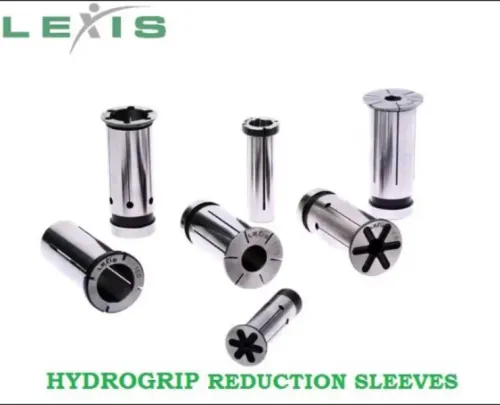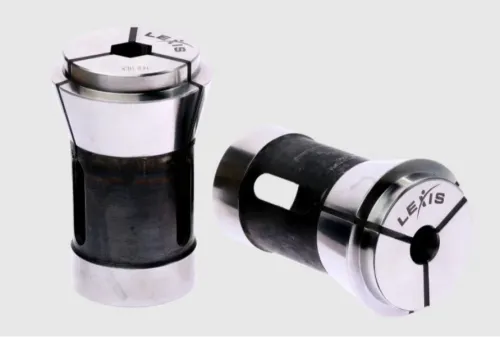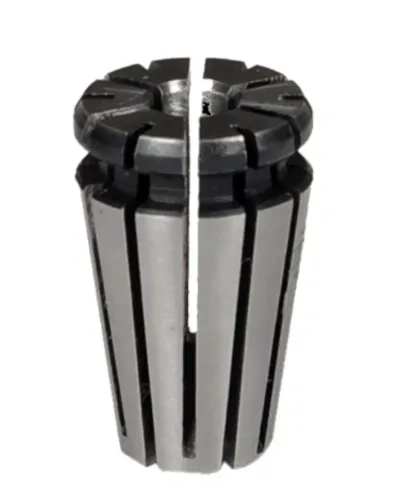


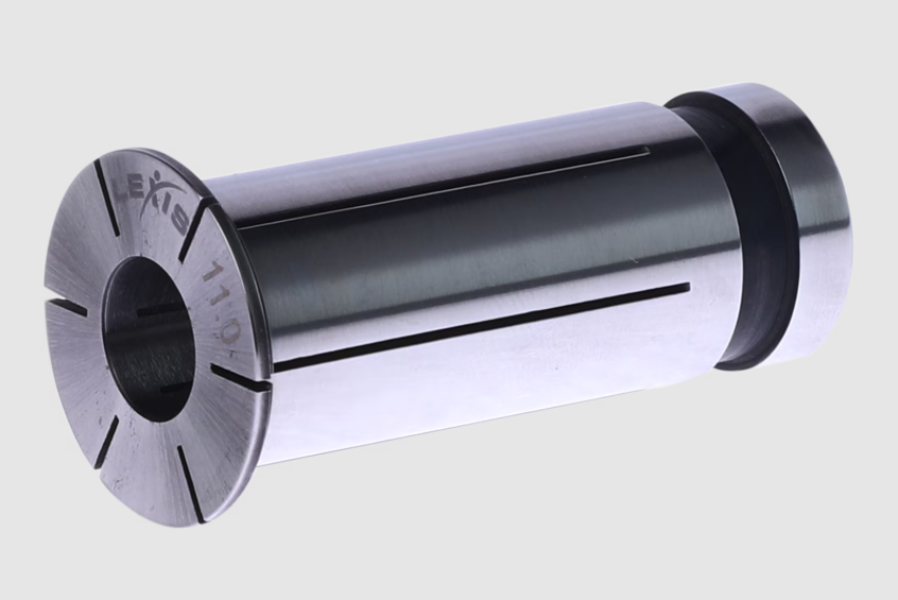
Tool diameter and holder bore do not always match directly. In hydraulic tool-holding systems, Hydro Grip Sleeves can provide the interface needed to accommodate suitable tool shank sizes while retaining the advantages of the hydraulic clamping arrangement.
For CNC workshops, tool rooms, and engineering units around Kinathukidavu, Tamil Nadu, knowing when to use a sleeve can prevent incorrect tooling combinations and improve setup planning.
What Is a Hydro Grip Sleeve?
A Hydro Grip Sleeve, often used as a reduction sleeve in compatible hydraulic holders, fits between the holder bore and the cutting tool shank.
Its purpose is to adapt the holder for an appropriate smaller tool diameter while transferring the holder's clamping force to the tool.
This provides manufacturers with greater flexibility when one compatible hydraulic holder needs to accommodate different tool diameters through suitable sleeves.
When Is a Sleeve Useful?
Consider a production environment where several cutting tools are required for different jobs. Purchasing a dedicated hydraulic holder for every tool diameter may not always be practical.
Compatible reduction sleeves can expand the usable tool-size range of an existing holder system.
They can be useful for:
- Precision drilling
- Reaming
- Finish machining
- Milling operations
- Tool room work
- Repetitive CNC production
Compatibility remains essential. Not every sleeve can be paired with every holder or cutting tool.
Why Sleeve Accuracy Matters
A sleeve becomes part of the tool-holding stack. Any dimensional problem, contamination, damage, or incorrect fit can therefore influence the final setup.
Operators should check the sleeve's external and internal surfaces before assembly. Dirt, chips, burrs, or damage can prevent correct seating.
The tool shank should also meet the requirements of the holder and sleeve system.
Avoid Improvised Size Adaptation
A common tooling mistake is treating a reduction sleeve as a generic spacer.
Precision machining requires properly manufactured components intended for the relevant holder. Improvised adaptations can create unreliable gripping conditions and may compromise both machining accuracy and operational safety.
The sleeve should match:
- Holder specifications
- Required tool diameter
- Tool shank characteristics
- Machining application
- Manufacturer's operating requirements
Build a More Flexible Tooling Inventory
For workshops handling changing job requirements, tooling flexibility can reduce setup complications. A planned combination of compatible hydraulic holders and sleeves may allow several tool sizes to be managed without unnecessarily expanding the number of complete holders kept in inventory.
This can be particularly relevant to job shops that frequently switch between component designs.
LEXIS Tooling Systems Private Limited supports machining businesses with tooling components intended for CNC and conventional manufacturing applications.
In Kinathukidavu and the broader Coimbatore manufacturing region, businesses often handle mixed production involving pumps, automotive parts, machinery components, fabricated products, and precision engineering. Flexible tooling arrangements can therefore be valuable when production requirements change frequently.
The role of Hydro Grip Sleeves may appear simple, but their dimensional accuracy and compatibility directly influence how the complete hydraulic holding system functions. Selecting the correct sleeve, keeping its surfaces clean, and using it only within its intended range can help manufacturers maintain a flexible and dependable tooling setup.