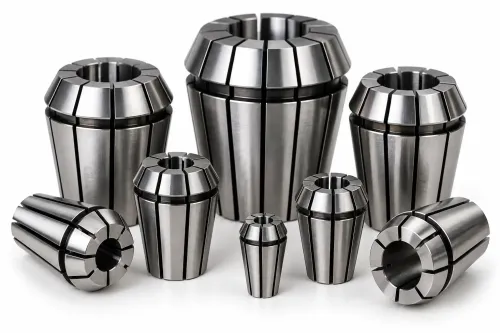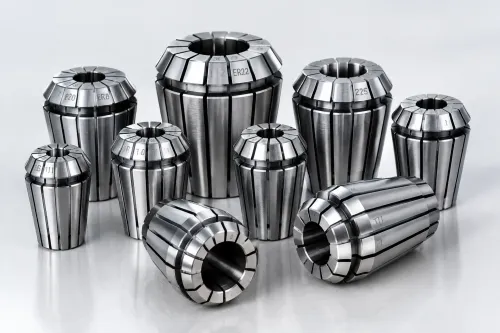


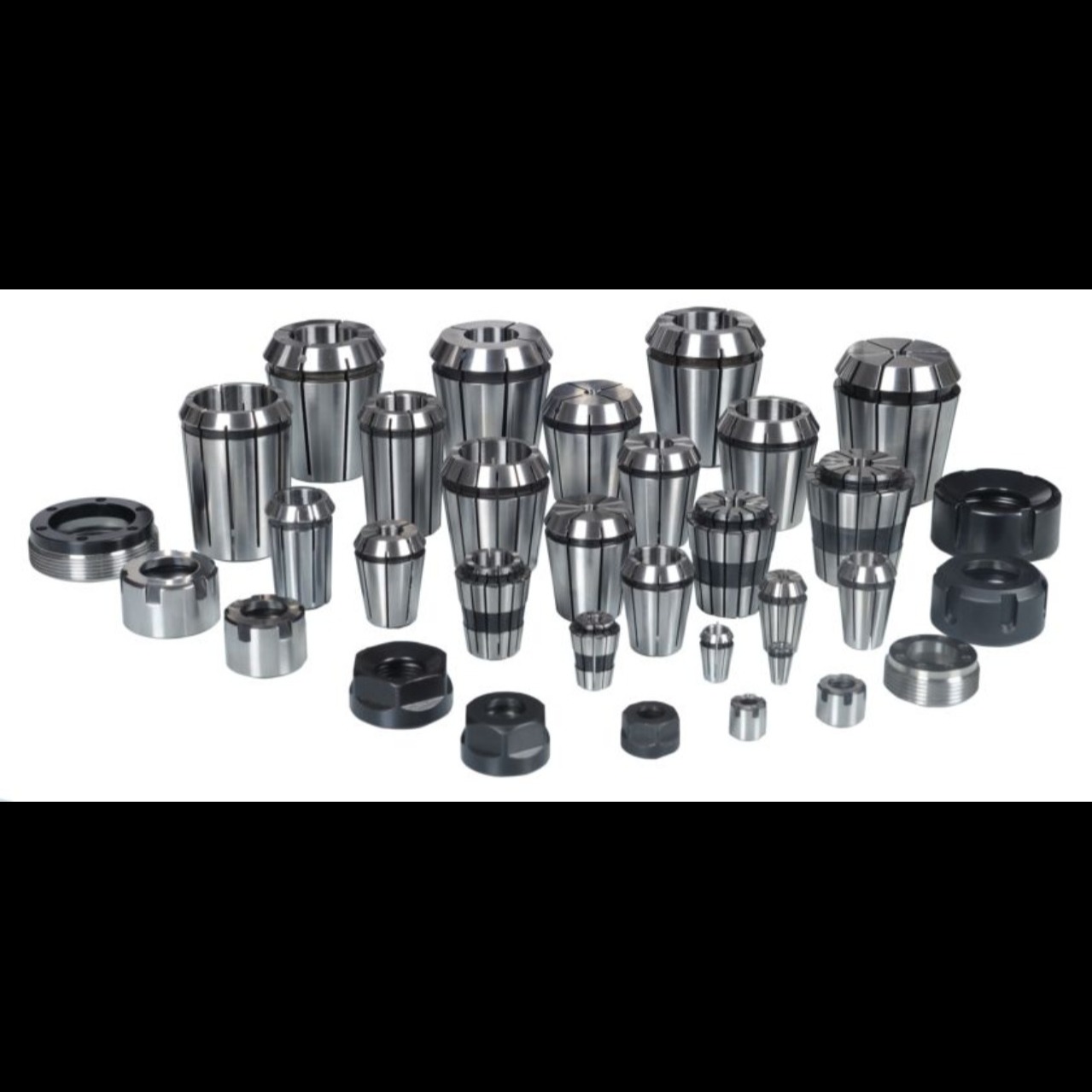
Collets are consumable precision components, but unusually frequent replacement can indicate a problem elsewhere in the machining process. When Machine collets begin losing grip, showing uneven wear, or producing inconsistent results sooner than expected, simply installing another collet may only provide a temporary fix.
Machine shops in Kinathukidavu and across Tamil Nadu can reduce repeated tooling problems by examining how collets are selected, installed, cleaned, and used.
Contamination on Contact Surfaces
Machining environments naturally produce chips, coolant residue, dust, and fine particles.
If contamination remains inside the collet, holder, or mating surface during assembly, the collet may not seat correctly. This can influence gripping and create uneven contact.
Cleaning should therefore be part of every collet change rather than an occasional maintenance task.
Using the Wrong Size
A collet is designed to operate within a specified gripping range.
Attempting to clamp a diameter outside that range can produce improper compression and unnecessary stress. Even when the tool or workpiece appears to be held, the setup may not provide the intended gripping performance.
Always match the collet specification with the actual diameter being held.
Excessive or Incorrect Tightening
More tightening force does not automatically mean better holding.
Tooling systems should be tightened according to their intended procedure and specifications. Improper tightening can stress components, while insufficient tightening may allow movement during machining.
Using appropriate assembly tools and following specified torque requirements where applicable creates a more controlled process.
Damaged Tool or Workpiece Surfaces
Machine collets cannot compensate for heavily damaged, burred, contaminated, or irregular surfaces.
Before clamping, inspect the area that will contact the collet. A damaged shank or workpiece may create uneven gripping pressure and can also transfer damage to the collet over repeated cycles.
Wrong Collet for the Application
Not all collets perform the same function.
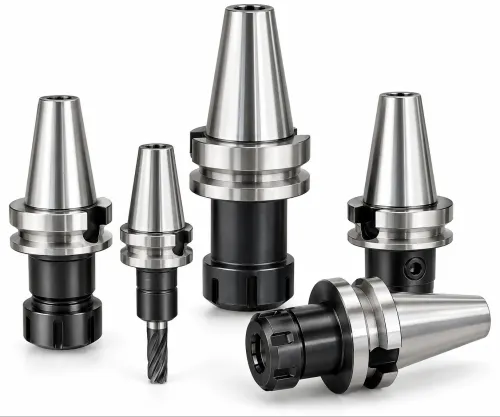
Tool-holding collets, workholding collets, Traub-type collets, ER systems, and other designs have different characteristics. Selecting purely by diameter while ignoring machine and application compatibility can result in poor performance.
Ignoring Machine Condition
When new collets repeatedly develop the same wear pattern, the collet itself may not be the root cause.
Spindle alignment, holder condition, draw mechanisms, machine setup, or other mechanical issues can contribute. Repeated abnormal wear should therefore trigger a wider inspection.
LEXIS Tooling Systems Private Limited works with industrial tooling systems for different machining applications, including collet and holder requirements.
For production businesses around Kinathukidavu and the larger Coimbatore engineering cluster, preventing avoidable tooling replacement can contribute to more predictable machine utilisation and operating costs.
A practical collet maintenance routine should include cleaning during every change, inspecting contact surfaces, checking the correct size, monitoring gripping behaviour, and recording recurring wear.
Well-selected Machine collets still require appropriate handling. When operators treat them as precision components rather than simple clamping accessories, it becomes easier to identify abnormal wear early and maintain more consistent machining performance.