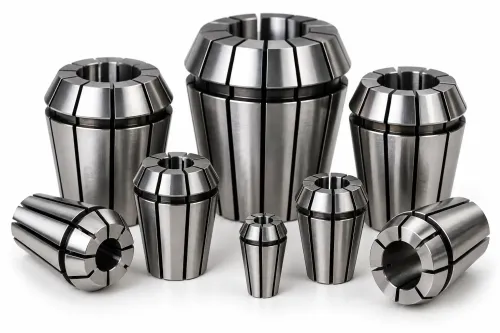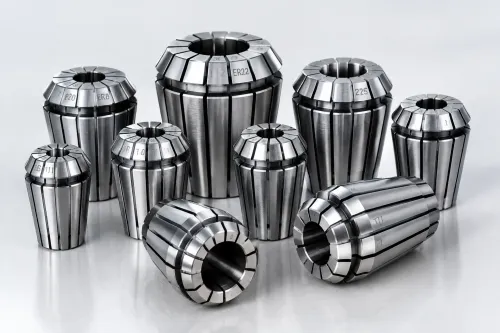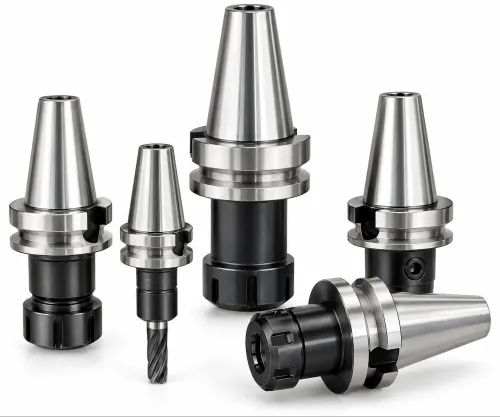


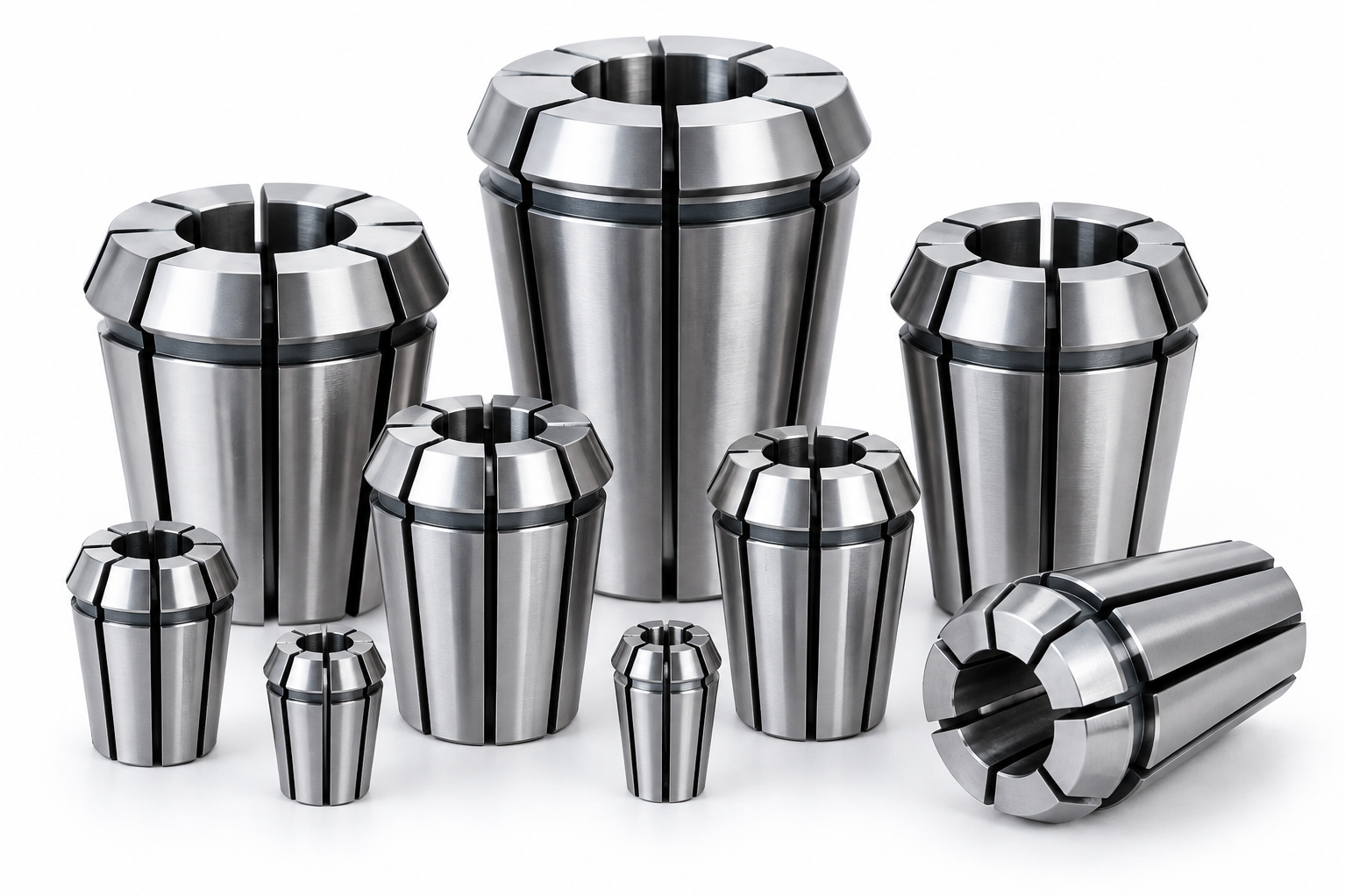
Crimping quality depends on controlled deformation. Whether a process involves forming, joining, closing, or compressing a component, the tooling must suit the material and required final geometry. Crimping Collets therefore need to be selected according to the application rather than simply matched by approximate diameter.
For industrial manufacturers around Kinathukidavu, Tamil Nadu, careful specification can help reduce inconsistent crimps, component damage, and unnecessary tooling replacement.
Begin With the Component
Before selecting a crimping collet, identify exactly what will be processed.
Useful information includes:
- Component outside diameter
- Material
- Wall thickness
- Required finished diameter
- Crimp profile
- Production quantity
- Machine type
- Required dimensional consistency
Providing complete component information makes it easier to determine whether a standard tooling configuration is suitable or a more application-specific solution is required.
Examine the Required Crimp Profile
Different applications may require different contact patterns and final forms.
The tooling should distribute force appropriately for the intended operation. An unsuitable profile can create uneven deformation, marking, or an inconsistent final shape.
This is why visual similarity between two collets is not enough to establish interchangeability.
Consider Material Behaviour
Metals, polymers, hoses, fittings, and other industrial materials respond differently to compression.
A crimping process should account for material characteristics and the final functional requirement of the assembly.
Where production involves a new material or component specification, controlled trials and inspection can help establish appropriate process settings before full-scale production begins.
Check Machine Compatibility
Crimping tooling operates as part of a machine system.
Dimensions, mounting method, closure range, and machine capacity should be confirmed before ordering.
Attempting to modify or force an incompatible collet into service can create unreliable production and potentially damage the tooling or equipment.
Inspect Tooling During Production
High-volume crimping involves repeated cycles, so tooling condition should be monitored.
Look for:
- Uneven wear
- Surface damage
- Cracks or deformation
- Material buildup
- Inconsistent finished dimensions
- Changes in crimp appearance
Inspection frequency should reflect production volume, material, and process conditions.
Choose a Supplier Using Technical Information
A useful supplier discussion should focus on specifications rather than generic product availability.
LEXIS Tooling Systems Private Limited works with industrial tooling requirements where component dimensions, machine compatibility, and application details are central to correct selection.
For manufacturers in Kinathukidavu and the wider Coimbatore industrial region, this approach is relevant across general engineering and component production environments where reliable tooling contributes to repeatable processes.
When sourcing Crimping Collets, prepare the component drawing or dimensional information where available, along with machine details and the desired crimp result. Clear technical information reduces assumptions during selection and helps establish whether the requested tooling is suitable before it reaches production.
Reliable crimping starts well before the machine cycle begins. It starts with defining the component, material, machine, and finished requirement accurately.