

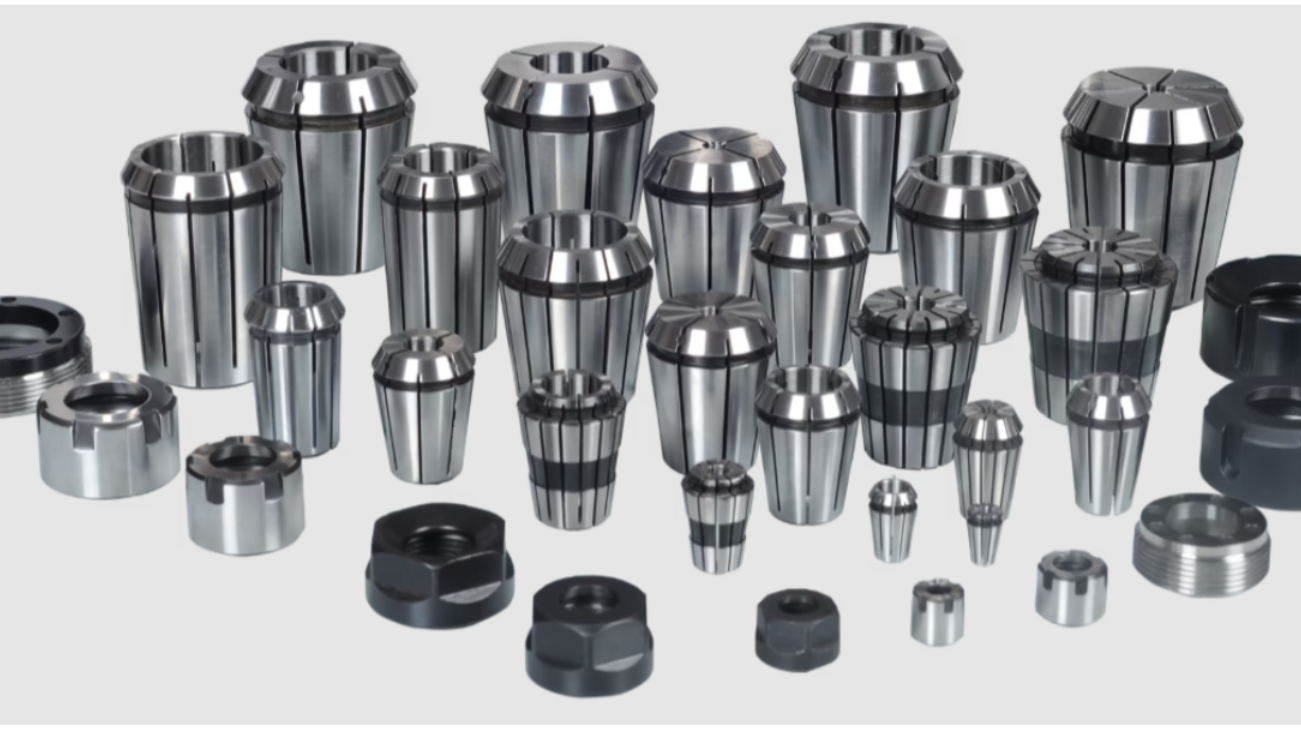
Choosing workholding is rarely a question of which system is universally better. The more useful question is which arrangement suits the component, production volume, machine, tolerance, and changeover requirement. Industrial collets can offer distinct advantages in suitable repetitive machining operations, while other workholding methods remain valuable for larger or irregular components.
Understanding these differences helps manufacturing units in Kinathukidavu, Tamil Nadu, make more informed tooling decisions.
Where Industrial Collets Perform Well
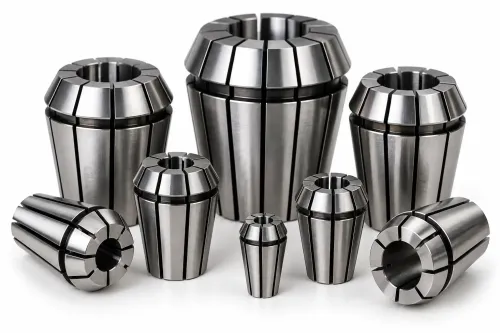
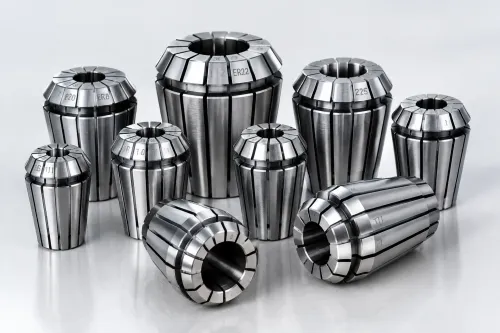
Collets grip compatible workpieces or tools around their circumference. This makes them particularly useful when the diameter and geometry suit the collet's designed gripping range.
They are commonly considered for:
- Repetitive turned components
- Bar-fed production
- Small precision parts
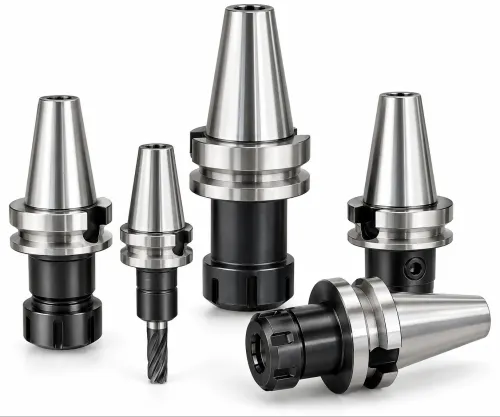
- CNC tool holding
- High-volume machining
- Tool room applications
Depending on their design, collets may be intended for either tool holding or workholding, so the two applications should not be confused.
Collets and Three-Jaw Chucks Serve Different Needs
A three-jaw chuck provides considerable flexibility for turning applications. Its adjustable jaws can accommodate a broad range of workpiece diameters and shapes.
A collet arrangement is generally more application-specific.
For repeated production of suitable round components, collet workholding can offer quick loading and consistent gripping. A chuck may be preferable where component sizes change frequently or the workpiece geometry requires a broader gripping range.
Neither solution replaces the other across every application.
Consider Changeover Requirements
Job shops often manufacture small batches of different components. In these environments, workholding flexibility may matter more than maximum repetition.
Dedicated production lines face a different challenge. If thousands of similar components are being produced, loading consistency and cycle-to-cycle repeatability become much more significant.
The right decision should therefore consider:
- Batch quantity
- Workpiece diameter
- Component geometry
- Required tolerance
- Changeover frequency
- Machine compatibility
- Production cycle
- Operator access
Accuracy Depends on the Entire Setup
Simply changing to a collet will not automatically solve dimensional problems.
Machine spindle condition, workpiece quality, cutting parameters, collet condition, mounting surfaces, and setup practices all influence machining results.
Industrial collets should also be kept clean and inspected for wear. Chips trapped on contact surfaces can affect seating, while worn gripping surfaces can reduce holding consistency.
Cost Should Be Evaluated Beyond Purchase Price
A cheaper workholding component can become expensive if it increases setup time, causes repeated adjustment, or contributes to rejected parts.
Conversely, purchasing specialised workholding for an application that does not require it can unnecessarily increase tooling inventory.
LEXIS Tooling Systems Private Limited works with tooling requirements for machining and industrial production environments, helping businesses identify components suited to particular machine applications.
Kinathukidavu's proximity to Coimbatore places local engineering businesses within one of Tamil Nadu's established manufacturing regions. Machine shops serving pumps, automotive, general engineering, machinery, and precision component sectors often encounter both high-mix and repetitive production.
For these manufacturers, choosing industrial collets should be based on measurable production needs. When the component, machine, gripping range, and batch requirements align, collet systems can provide an efficient workholding approach. When they do not, a different workholding method may be the more practical choice.