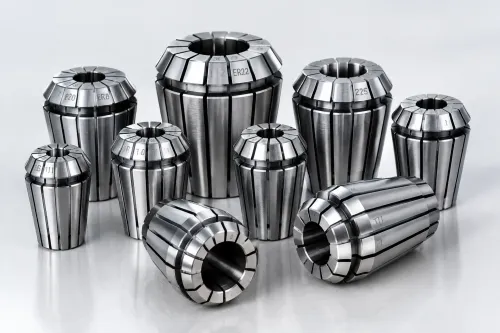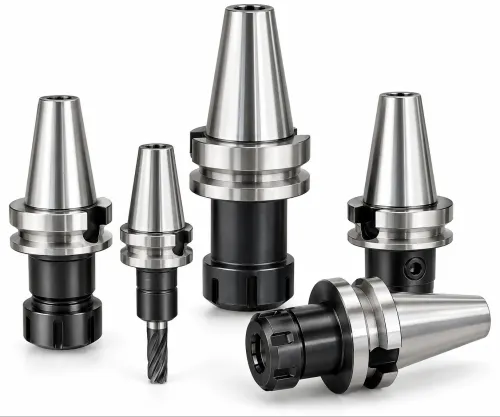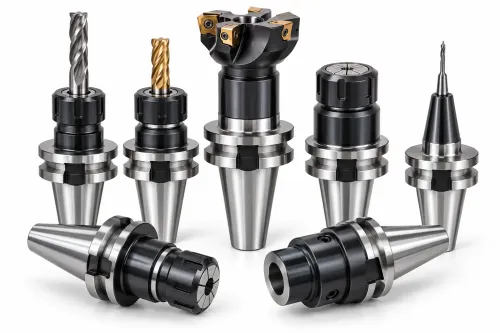


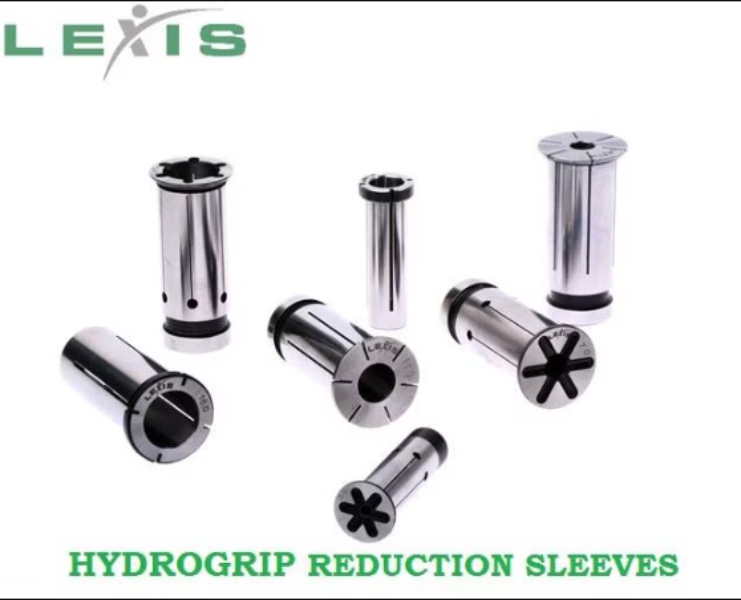
Machining at demanding tolerances requires more than a capable CNC machine. The connection between the spindle and cutting tool must remain stable as cutting forces, spindle speeds, and machining conditions change. Hydro Grip holders are designed to provide controlled hydraulic clamping for suitable tooling applications.
For precision machining businesses in Kinathukidavu and the wider Tamil Nadu manufacturing sector, hydraulic tool holding can be useful where runout control, vibration management, and repeatable tool clamping are priorities.
How Hydraulic Tool Holding Works
A hydraulic holder uses an internal hydraulic clamping mechanism rather than relying solely on mechanical compression around the cutting tool.
When the clamping mechanism is activated, hydraulic pressure acts on the holder's internal clamping section. This creates controlled gripping force around the inserted tool or compatible sleeve.
The resulting connection is intended to provide secure and relatively uniform tool clamping when the holder is used according to its specifications.
Why Machining Stability Matters
During cutting, vibration can affect both the tool and workpiece. Excessive vibration may contribute to poor surface finish, noise, uneven tool wear, or difficulty maintaining dimensional consistency.
Tool holding is only one part of vibration control. Machine rigidity, spindle condition, cutting parameters, tool geometry, workholding, and material all contribute.
However, a stable holder can help create a more controlled interface between the spindle and cutting tool.
Applications for Hydro Grip Holders
Hydraulic holders can be considered for suitable precision machining operations involving:
- Reaming
- Drilling
- Finish milling
- Precision boring
- Tool room machining
- Die and mould applications
- Component manufacturing
The best holder still depends on the individual operation. Heavy roughing, high-speed finishing, and precision reaming can impose very different requirements on a tool-holding system.
Correct Tool Selection Still Matters
A high-quality holder cannot correct an unsuitable cutting tool or incorrect machining parameters.
Users should consider the complete setup, including tool diameter, shank tolerance, holder specification, spindle interface, cutting speed, feed rate, workpiece material, and required finish.
The tool shank and holder bore should also be clean before assembly. Chips or contaminants at the clamping interface can interfere with accurate seating.
Maintenance Should Not Be Ignored
Hydraulic holders are precision tooling components. Mishandling, excessive tightening, incorrect tool insertion, or damage to functional surfaces can compromise performance.
Operators should follow the recommended clamping procedure and periodically inspect the holder for signs of damage or abnormal behaviour.
LEXIS Tooling Systems Private Limited serves industrial tooling requirements where selecting the appropriate holding solution is an important part of machining performance.
This has particular relevance to Kinathukidavu and nearby Coimbatore, where machine shops and engineering manufacturers work across diverse component categories and production volumes.
Hydro Grip holders are not automatically the right choice for every CNC operation. Their value becomes clearer when the application calls for controlled gripping, repeatable setup, and stable precision machining. Evaluating the complete machining process before selecting a holder helps ensure that the tooling system supports the actual production requirement rather than simply adding another component to the spindle.