

“Drill collet” is not a complete purchasing specification: an ER collet, Morse-taper collet, straight-shank collet and collet used inside a drill chuck can share a bore size while remaining incompatible. By the end, you will have a practical checklist for matching the machine interface, approving dimensions and inspection results, and comparing export quotations on measurable terms.
Key takeaways
- Confirm the collet, holder, nut and drill shank form one complete fit.
- Record taper, clamping range, runout, material and heat treatment on the specification sheet.
- Do not treat ER, DIN 6499 and BT as interchangeable requirements.
- Compare inspection evidence, packing details and export documents before accepting quotations.
Identify the Collet and Confirm the Complete Fit
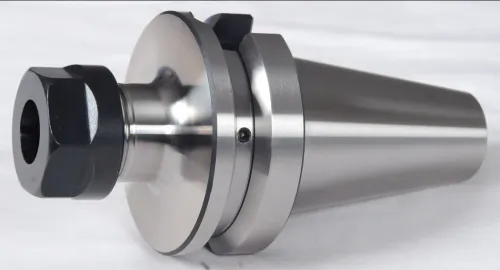
A drill collet is a slotted, tapered sleeve that grips a drill’s shank inside a matching holder. It is not the complete collet chuck, which includes the body and nut; it is not a jaw-type drill chuck or a tapping collet designed to compensate for thread lead.
Treat “industrial collet for drill collets” as a search phrase, not a purchase specification.
Confirm the fit in this order:
- Identify the tool interface: ER8, ER11, ER16, ER20, ER25, ER32 or ER40 under ISO 15488 or DIN 6499; Morse taper; straight shank; or a collet that sits inside a drill chuck.
- Identify the machine and holder interface separately, such as BT30, BT40 or BT50, including taper, retention-knob compatibility, chuck thread and gauge length.
- Match the drill shank diameter to the collet’s actual bore and closing range. A 3/8-inch shank measures 9.525 mm; it is not equivalent to a 9–10 mm metric collet.
- Confirm the required projection, tool mass and clearance against the holder’s usable length.
- Request the nut torque and state whether it applies to a dry or lubricated thread.
Do not copy the collet’s advertised maximum rpm onto the assembled tool. Holder balance, nut design, projection, spindle interface and coolant method can lower the safe assembly speed. Confirm the complete assembly rating before release. Use the exact construction and function, not the phrase “industrial collet,” when checking tariff classification.
Build a Specification Sheet That Can Be Inspected
An inspectable sheet states the collet type, standard, dimensions, tolerances and test conditions—not merely “industrial collet specifications.” Identify the ER series, such as ER16 or ER32, and cite ISO 15488 or DIN 6499.
- Record outside diameter, overall length, thread or interface, nominal bore, minimum and maximum gripping diameter, and each dimensional tolerance.
- State material or material family, heat-treatment condition, hardness range, slot geometry, surface finish and permissible speed.
- Give the recommended nut torque, specifying dry or lubricated assembly, coolant requirement, quantity per production lot, lot traceability, inspection report, packaging method and replacement policy.
Runout figures are incomplete without their measurement location and assembly condition. Use a table that separates these results:
| Measurement | Required entry | Test condition |
|---|---|---|
| Collet-only runout | Limit and indicator position | Collet seated in a verified nut; specify bore or test mandrel diameter |
| Chuck-body runout | Limit at the taper and nose | Clean holder, correct retention hardware, measured from the spindle datum |
| Tool-at-gauge-length runout | Limit at stated projection | Straight test shank, specified gauge length and clamping torque |
| Concentricity and balance | Tolerance or balance grade | Identify whether the result applies to the collet, holder or complete assembly |
Add the test instrument resolution, calibration status, sample quantity and acceptance criteria. A torque value without its lubrication condition is not reproducible. Record spindle speed, coolant type or pressure, and temperature when those conditions affect the result.
Recognise that spindle taper dirt, nut seating and tool straightness can worsen assembly runout even when the collet passes alone.
Separate ER, DIN 6499 and BT Interface Requirements
Specify the individual collet and complete holder assembly as separate line items; otherwise, a supplier’s collet rpm may be mistaken for the safe speed of the drill holder. The phrase “industrial collet for drill collets” does not identify an interface or a fit.
For an ER purchase, state the series and standard together. ER collets are commonly ordered to ISO 15488 or the corresponding DIN 6499 system, but DIN 6499 identifies the collet system, not the BT spindle interface.
Include these fields in the purchase line:
- ER series: ER8, ER11, ER16, ER20, ER25, ER32 or ER40
- Nominal bore and complete closing range, in millimetres
- Minimum insertion depth and usable gripping length
- Runout limit, gauge method and inspection datum
- Collet-only speed rating, clearly marked as separate from assembly speed
- Quantity, batch identification and inspection report required
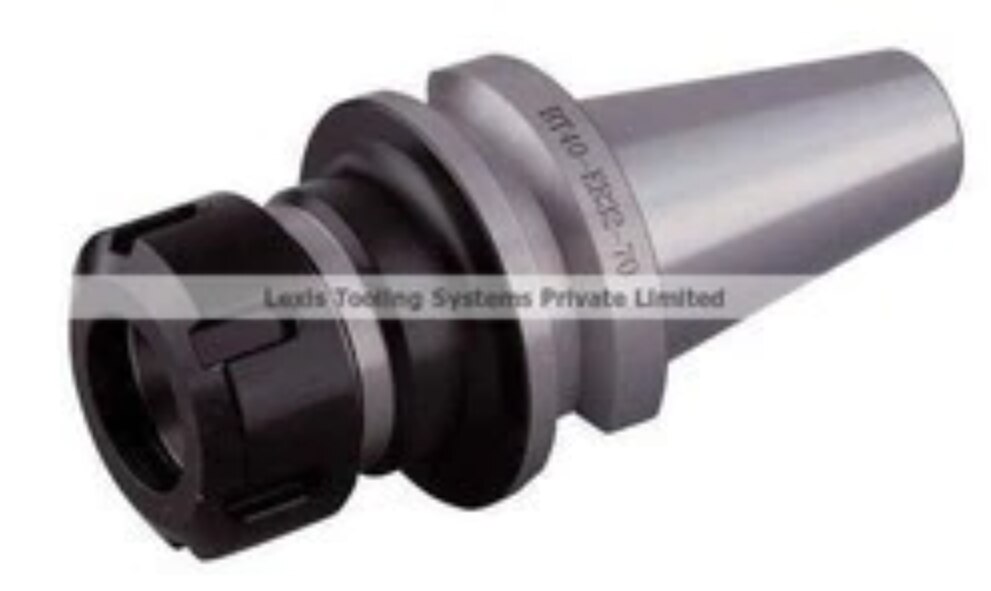
Specify the BT interface on the holder line, such as BT30, BT40 or BT50. Add the taper designation, retention-knob compatibility, gauge length, tool projection and holder balance condition. A BT40 holder with an ER32 collet is an assembly; neither part alone defines the permissible rpm.
Set the final speed from the assembled system. The collet series, nut, holder balance, tool mass, projection, spindle interface and coolant method can reduce it. Your industrial collet specifications should therefore state the tested assembly limit, not copy the highest number printed on an individual collet.
Check Material, Heat Treatment and Operating Conditions
A collet that grips once is not proven for production. For buyers searching “bulk industrial collet drill collet for export India,” require material identification, heat-treatment records and a lot-level functional test rather than accepting “hardened steel.”
- Request the material grade or defined material family, heat-treatment condition, hardness range and surface-finish result. Check that the inspection report identifies the same production lot as the cartons.
- Examine slot geometry, slot edges and the closing range. Burrs, cracked slots or uneven springing cause drill-shank movement, poor runout and early fatigue.
- Ask for repeated clamping data at the stated bore sizes, including runout measured with a specified gauge length and test method. One dimensional report cannot prove repeatable gripping.
- Require the recommended collet-nut torque and state whether it applies to a dry or lubricated nut. Under-torque permits shank slip; over-torque can distort the nut, collet or holder.
- Specify coolant type, pressure and delivery method, then confirm the test used those conditions. Flood coolant, through-tool coolant and dry cutting impose different sealing, corrosion and balance demands.
- Treat maximum rpm as an assembly limit, not a collet-only promise. Confirm the collet series, nut, holder balance, tool projection, drill mass, spindle interface and coolant method before approving the speed.
- Reject a quotation that gives no lot traceability, hardness range, torque basis or speed calculation.
Approve the production lot only after the supplier’s records match the ordered bore, standard, torque, coolant condition and complete-holder rpm limit. A “drill collet exporter India” label is not technical evidence.
Compare Export Quotations, Inspection Files and Shipping Documents
Compare each quotation by measurable specifications and documentary evidence, not by the phrase “drill collet exporter India.” A valid offer for a bulk industrial collet drill collet for export India must state the collet type, interface standard, bore, closing range, runout limit and test method, torque, speed rating, coolant requirement, material, hardness, lot quantity, packaging and replacement policy.
| Document | Compare or verify | Reject when |
|---|---|---|
| Quotation | Part number, metric or inch bore, permitted closing range, unit price, quantity break, lead time and replacement terms | “Drill collet” is the only specification |
| Inspection file | Material or material family, heat-treatment condition, hardness range, slot and surface inspection, runout result, test method and lot traceability | Results lack a lot number or use an unspecified “hardened steel” claim |
| Shipping file | IEC, commercial invoice, packing list and shipping bill; match part numbers, quantities and units | Descriptions or quantities conflict across documents |
| Classification | Confirm the tariff heading for the exact separate collet, holder or drill-chuck assembly | An HS code is assigned solely from the word “collet” |
Ask for a signed pre-shipment inspection report tied to the production lot, then approve against retained samples or your gauge plan. LEXIS TOOLING SYSTEMS PRIVATE LIMITED is one supplier you could ask to provide this traceable evidence before release.
Check the first-off sample and random lot pieces for bore, outside diameter, length and runout. Hold shipment if the report omits the gauge, test speed, acceptance limit or failed-piece disposition.
Related items
 | COLLETS Collets for Industries View service → |
 | Precision Turned Components Product Price :Get Latest Price Industrial Collet Our organization provide a wide collection of BT Collet Chucks to our esteemed customers. View product → |
Frequently asked questions
How do you confirm that a drill collet is the correct fit?
Match the drill shank diameter and form with the collet’s clamping range, taper, nut and holder interface. Confirm that the item is a drill collet rather than a complete chuck, jaw chuck or compensating tapping collet.
What should an industrial collet specification sheet include?
List the collet type, nominal size, clamping range, taper, holder interface, runout limit, material, heat treatment, operating conditions, inspection method and required documents.
Are ER, DIN 6499 and BT interchangeable specifications?
No. ER describes a collet family, DIN 6499 defines dimensional and functional requirements for ER-type collets, and BT identifies a machine-tool holder interface. Confirm each requirement separately.
Which export documents and inspection records should buyers compare?
Compare the quotation with dimensional inspection reports, material and heat-treatment records, packing details, invoice, packing list, certificate of origin and shipping documents required for the destination.
Related services
ER Collets ER20 Collet system also known as RD20 Collet system are standardized and manufactured as per DIN 6499 standard guidelines and are truly... View service → |
ER Collets ER25 Collet system also known as RD25 Collet system are standardized and manufactured as per DIN 6499 standard guidelines and are truly... View service → |
ER Collets ER16 Collet system also known as RD16 Collet system are standardized and manufactured as per DIN 6499 standard guidelines and are truly... View service → |
ER Collets ER40 Collet system also known as RD40 Collet system are standardized and manufactured as per DIN 6499 standard guidelines and are truly... View service → |