

Selecting a tool holder should begin with the machine spindle, not with the cutting tool catalogue. BT holders are widely used with compatible CNC machining centres, but the correct holder depends on spindle interface, tool type, operation, projection length, and accuracy requirements.
For manufacturers and machine shops in Kinathukidavu, Tamil Nadu, a systematic selection process can prevent incompatible purchases and help build a more useful tooling inventory.
Start With the Machine Interface
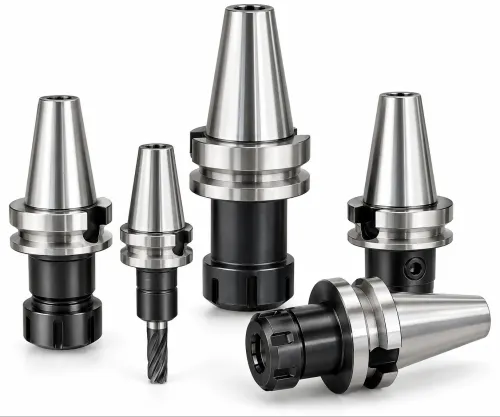
BT tooling is based on a steep-taper interface available in different sizes and configurations. The holder must match the spindle specification of the machine.
Before purchasing, verify the machine documentation and existing tooling.
Do not assume that two holders with a similar visual profile are interchangeable. Interface dimensions, size, retention requirements, and machine specifications matter.
Match the Holder to the Cutting Operation
A machining centre may perform drilling, milling, tapping, boring, reaming, and finishing within the same component cycle.
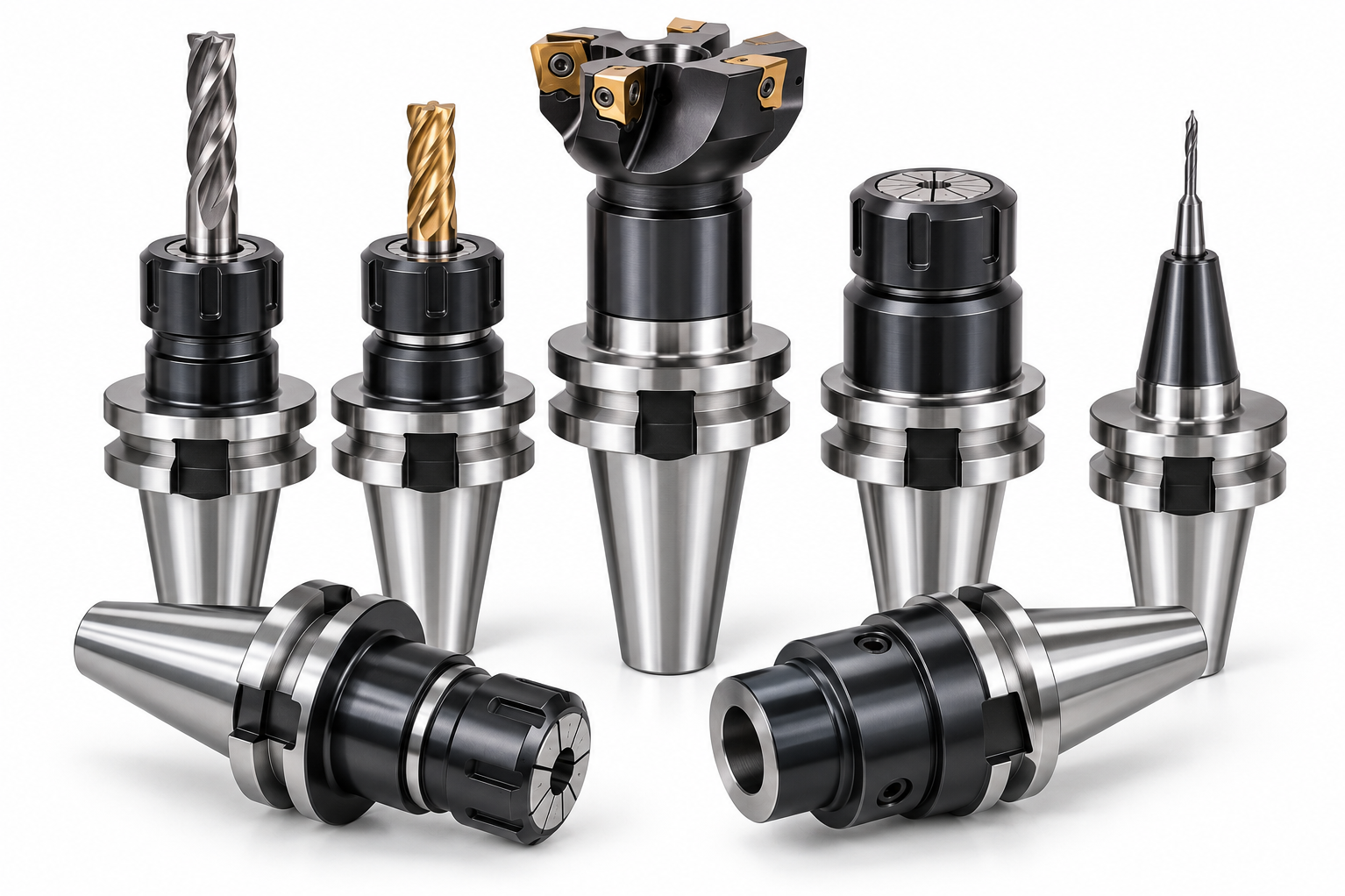
Each operation can require a different tool-holding approach.
When selecting BT holders, consider whether the holder will be used for:
- End milling
- Drilling
- Reaming
- Tapping
- Boring
- Face milling
- Precision finishing
The required holder style should be selected according to the cutting tool and machining conditions.
Keep Projection as Short as Practical
Tool reach sometimes needs to be extended to access deep features or avoid interference with the component and fixture.
However, unnecessary projection can reduce rigidity.
The objective is not always to choose the shortest holder available, but to use a configuration that provides the required access without adding avoidable overhang.
This becomes particularly important during demanding milling operations.
Consider Runout and Balance Requirements
Not every machining application requires the same level of tooling precision.
High-speed or fine-finishing operations may place greater emphasis on runout and balance, while general-purpose machining may have different priorities.
Purchasing decisions should therefore reflect actual machine speeds, component tolerances, cutting tools, and production requirements.
Check Pull Stud Compatibility
The holder and retention system work together.
A compatible pull stud or retention knob should be selected according to the machine specification. Using an incorrect component simply because the thread appears to fit can create retention or tool-change problems.
Evaluate Supplier Capability
For production businesses, holder availability is only part of the buying decision. Consistent specifications, access to related accessories, and the ability to identify suitable tooling for different machine interfaces are also useful.
LEXIS Tooling Systems Private Limited supports CNC and industrial machining requirements with tool-holding components for relevant manufacturing applications.
This is particularly useful for Kinathukidavu-based engineering businesses with access to the broader Coimbatore manufacturing ecosystem, where CNC machining supports automotive, pump, machinery, textile engineering, and general component production.
When buying BT holders, begin with machine compatibility and then work outward to the cutting application. Holder style, projection, retention requirements, tool diameter, and machining conditions should all be considered together.
A planned tooling inventory built around actual machine and job requirements is generally more valuable than accumulating holders without a defined application.