

The value of a sliding-head collet depends on more than its purchase price: guide-bush stability, bar preparation, cycle time, scrap, tool life and replacement frequency all affect the result. By the end, you will be able to compare the process with other workholding methods, calculate its production payoff and specify a compatible collet without relying on a size label alone.
Key takeaways
- Use the guide bush and collet as one accuracy system.
- Compare cycle time, bar support and changeover effort against chucking.
- Calculate payback from output, scrap, setup time and collet life.
- Specify TG 75, TG 100 or TG 150 by interface and dimensions.
How Sliding-Head Turning Uses the Collet and Guide Bush
During sliding-head turning, bar stock passes through the spindle, collet and guide bush while the headstock moves axially. The collet grips the bar and advances with the sliding headstock, controlling concentricity at the spindle end; the guide bush supports the bar radially close to the cutting tools.
That separation matters. A worn, misaligned or incorrectly sized guide bush lets the bar move at the cut, causing runout, vibration or deflection, and changing the collet cannot correct it.
This arrangement suits small-diameter, long slender parts with high length-to-diameter ratios because support remains close to the tool instead of leaving a long unsupported section between chuck and cut.
Fixed and rotating guide bushes make different compromises:
| Type | Main benefit | Main requirement or cost |
|---|---|---|
| Fixed guide bush | Strong direct support and tight clearance | Consistent bar diameter, roundness and surface condition; sliding friction must be controlled |
| Rotating guide bush | Less sliding friction between bar and bush | Additional bearings, synchronization and maintenance |
A fixed bush exposes lobing, scale, poor roundness and diameter variation that ordinary chucking might tolerate. A bar acceptable for a chuck can still bind or wander in a close-clearance bush, whose clearance is often measured in hundredths of a millimetre and depends on the material, diameter and bush design.
That is why sliding head collets for high volume turning deliver value only when bar quality and guide-bush setup match the process.
When Sliding Head Collets Beat Chucks and Other Workholding Options
Choose sliding head collets for high volume turning when long unattended runs, repeated part families, small-diameter bar, tight concentricity or slender parts make support near the tool more valuable than simple clamping.
The guide bush stabilises the cut while the collet maintains spindle-end grip, reducing deflection that a conventional chuck can leave in a long, narrow workpiece.
| Option | Strength | Limitation |
|---|---|---|
| Jaw chuck | Simple for short, rigid parts | Jaws provide less support near a distant cutting zone |
| Fixed-head collet | Fast, straightforward workholding | Poorer choice for slender stock needing close radial support |
| Bar-puller | Adds automatic bar feeding | Performs a feeding operation; it does not provide continuous guide-bush support |
| Hydraulic collet | Fast, repeatable actuation | Still needs suitable gripping geometry and correct bar fit |
| Guide-bush alternative | Can reduce setup demands | May sacrifice support, clearance control or friction performance |
The decision favours sliding head collets when stable production matters more than minimum setup effort. Allow for guide-bush adjustment, consistent bar diameter and roundness, collet cleaning, surface-quality control and a more involved setup; fixed bushes expose lobing, scale and diameter variation quickly.
Choose another system when:
- The job is low volume and changeover time outweighs support benefits.
- Stock diameter and surface condition vary widely between bars.
- The part is short and rigid, with no need for close support near the tool.
- A chuck or fixed-head collet already holds the work accurately without deflection.
The strongest case comes from repeated thousands-part runs, where fewer slips, corrections, vibration events and rejected parts outweigh the added work.
Calculate the Production Payoff Before You Buy
Use good parts per shift, not cycle time alone, to decide whether sliding head collets for high volume turning earn their cost. A stable collet can repay its price through fewer bar slips, longer tool life, less vibration, consistent part length and lower scrap.
Record one representative shift:
- Parts per hour and cycle time
- Bar remnant length and material cost per bar
- Bar-loading, changeover, offset-correction and tool-change minutes
- Tool life, tooling cost per part and scrap rate
- Collet price, replacement interval and any unscheduled replacements
Subtract every lost minute from the available machine time, then calculate good parts: completed parts minus rejected parts. Include bar-end waste, rejected parts, adjustments and collet-related stoppages. A cheap collet that needs repeated adjustment can cost more than a costlier collet with stable geometry.
Before | After Machine minutes lost per shift | Loading, offsets, slips and changes | Reduced interruptions Material cost per good part | Bar remnant waste and scrap | Lower waste and scrap Labour or machine-hour cost | Lost minutes × hourly rate | Fewer idle minutes Tooling cost per part | Shorter tool life | Longer, steadier tool life Collet cost per good part | Collet price ÷ expected good parts before replacement | Price ÷ good parts over replacement interval
Compare total shift output and total cost per good part. The strongest business case appears when the machine runs long periods and small gains repeat across thousands of parts; a two-minute saving per load matters only when loads occur frequently.
Prevent Fit, Setup and Cleaning Problems From Erasing the Gain
Release production only after the collet, bar and guide bush pass a controlled fit check. A close fit protects the repeatability that makes sliding-head collets for high-volume turning worthwhile.
1. Measure the actual bar diameter and roundness at several points, then compare both with the collet’s specified bore range. A significantly undersize bar loses contact area and can slip; oversize stock can prevent full closure or overload the collet nose.
2. Confirm the collet’s nose geometry, gripping length, machine interface and draw-in or closing action. Check that the collet seats fully and closes without excessive force or visible distortion.
3. Inspect guide-bush clearance against the material, measured diameter and surface condition. Identify whether the bush is fixed or rotating, then check alignment and clearance for that design; chips or a damaged bore can produce uneven support.
4. Verify the manufacturer’s bore, outside-dimension, runout and interface tolerances against the supplied drawing and inspection data. Record any deviation before releasing the job.
Test runout with a known round test bar, recording the gauge location and method, such as a dial indicator at the collet nose and again near the guide bush. Separate collet runout from errors caused by bar straightness, guide-bush alignment and cutting forces.
Poor fit appears as bar slipping, bellmouthing, marking, runout, vibration, unstable cutoff or inconsistent part length. Chips in the collet bore, slots, spindle nose or guide bush can create these symptoms; clean those surfaces before increasing draw pressure, because more force will not correct uneven contact.
Specify TG 75, TG 100 or TG 150 Collets by Interface, Not Name
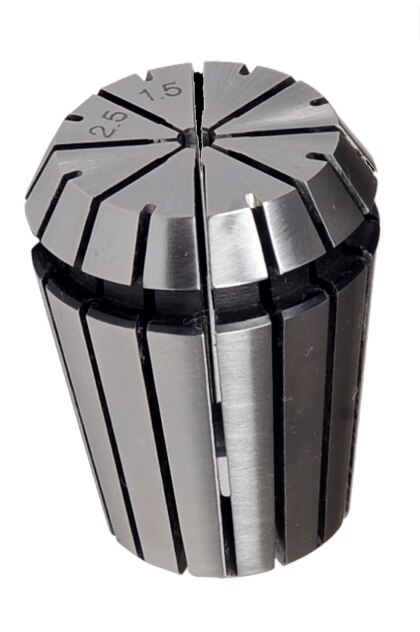
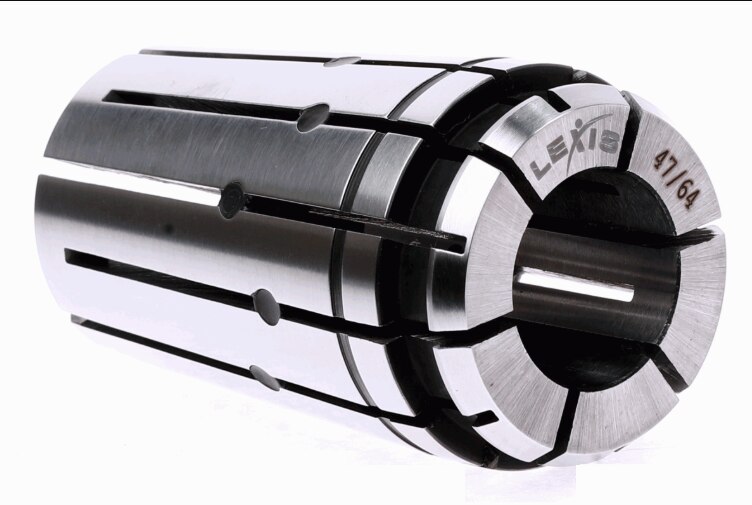
TG 75 sliding head collets, TG 100 sliding head collets and TG 150 sliding head collets are not automatically interchangeable. The same designation does not prove identical nose geometry, bore length, keying, thread, taper or machine-model interface.
Turn the designation into a purchasing specification:
1. State the machine model, spindle position and collet station, then attach the supplier’s drawing.
2. Specify nominal bore, bore tolerance, outside geometry, gripping length, key or drive features, material and heat treatment.
3. Require the supplier’s measured runout requirement, including the datum, gauge method and measurement location. “Precision” alone is not a comparable claim.
4. For sliding head collets India sourcing, request an inspection report that records bore size, critical outside dimensions and runout measured on a known test mandrel.
5. Confirm that the drawing matches the machine before ordering samples. A collet that fits the spindle but has the wrong nose, key or closing geometry can slip, mark the bar or prevent full closure.
LEXIS TOOLING SYSTEMS PRIVATE LIMITED can be relevant when you need a manufacturer or exporter to discuss these drawing-level requirements, but select the supplier through verified compatibility, repeatability and inspection evidence rather than a size label.
Compare total production cost, including setup adjustments, scrap, bar slippage, tool wear and replacement intervals. A cheaper collet becomes expensive when its geometry repeatedly interrupts production.
Sliding head collets are worth using when their support and repeatability reduce more production loss than their setup and replacement costs.
Related products
 | TG Collets Product Price :Get Latest Price Avail from us a large range of TG 100 Collets, as we are engaged in manufacturing, supplying and exporting these... View product → |
 | TG Collets TG Collets The company introduces itself as one of the preeminent Manufacturer, exporter and Supplier of superior quality TG Collets. View product → |
Frequently asked questions
How does a collet work with the guide bush in sliding-head turning?
The collet grips and advances the bar with the sliding headstock, while the guide bush supports the bar close to the cutting tools.
When are sliding-head collets better than chucks for high-volume turning?
They are a stronger choice when bar stock feeds through the spindle, close tool support improves accuracy, and repeated production benefits from fast, consistent gripping.
How do you calculate whether sliding-head collets will pay for themselves?
Compare the expected gains in cycle time, output, scrap, setup time and operator effort with the purchase price, changeover cost and collet replacement cost.
How should you specify TG 75, TG 100 or TG 150 sliding-head collets?
Confirm the machine interface, collet dimensions, bar capacity, nose and closing geometry, rather than selecting a collet from the TG name alone.