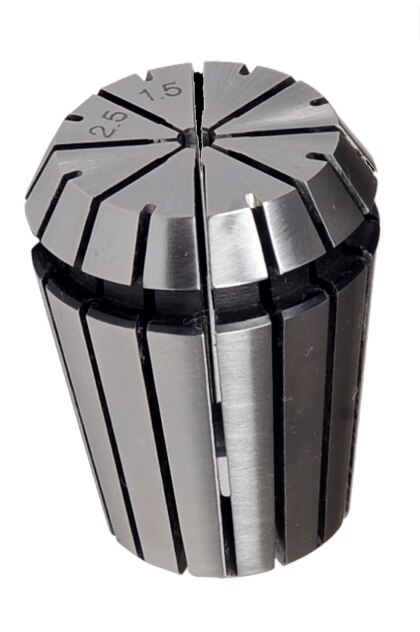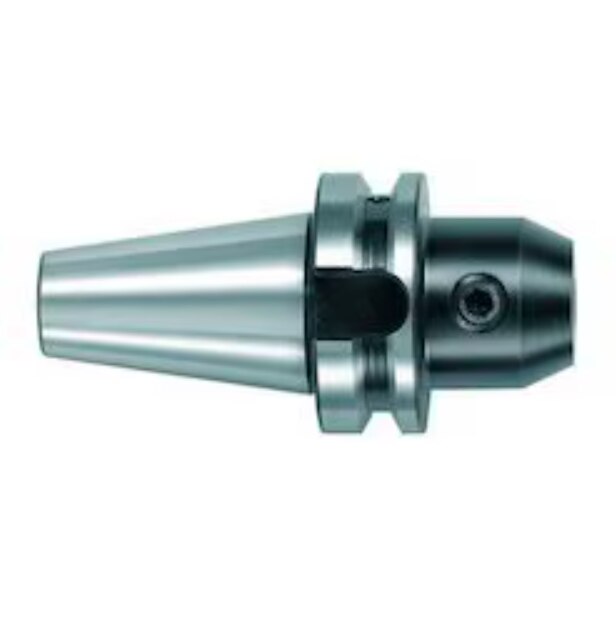


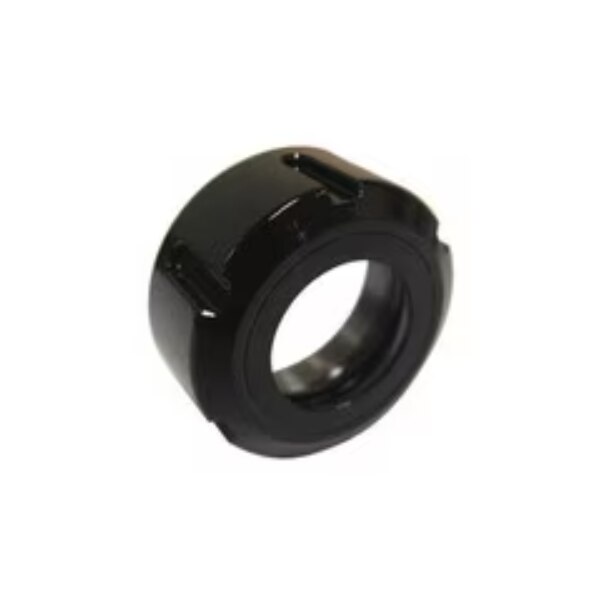
A “ball bearing nut” can mean an ER collet-clamping nut or a recirculating ball-screw nut, and the two parts cannot replace each other. Before you order, you will be able to identify the correct assembly, match its dimensions and operating limits, and send a quotation request that leaves no critical detail unresolved.
Key takeaways
- Confirm whether you need an ER collet nut or recirculating-ball screw nut.
- Record thread, outside diameter, length and machine-tool interface dimensions.
- Request runout, maximum speed, torque and bearing temperature limits in writing.
- Inspect markings, thread fit, collet seating and runout before acceptance.
Identify the Nut Type and Collet System First
Confirm the nut type and collet system before comparing ball bearing nut specifications for cnc machines in tamil nadu. “Ball bearing nut” can mean an ER collet nut or a recirculating-ball screw nut for a CNC axis; these parts are not interchangeable.
1. Write “ER ball-bearing collet nut” on the order, then add the collet family and nominal size: ER11, ER16, ER20, ER25, ER32, ER40 or ER50. State the holder or spindle assembly where it will be installed.
2. Check the collet standard. ER, DA and other double-angle collet systems use different geometries and cannot be substituted by matching size labels alone. An ER32 nut identifies the nut family, not the tool diameter; the collet’s own capacity determines the clamped shank range.
3. Confirm what “bearing” means. An ER ball-bearing collet nut reduces friction between the rotating nut and the stationary clamping interface as you tighten the collet. A conventional slotted ER nut and a plain nut do not provide that bearing action, while a bearing-supported floating nut is a different assembly and is not automatically compatible.
The bearing cannot repair a damaged taper, dirty collet, incorrect collet seating or wrong shank size. Those faults still cause excessive runout and uneven gripping, so match the nut to the holder drawing and inspect the complete clamping path before ordering.
Match Thread, Envelope and Machine-Tool Interface Dimensions
A correct ER label does not prove an installable nut. Request a dimensioned drawing for ball bearing nut dimensions in tamil nadu showing:
- Thread designation and pitch, maximum outside diameter, total height and nose profile
- Bearing race diameter, pilot or locating diameter, wrench flats and spanner engagement
- Collet seating geometry and permissible dimensional tolerances
Common ER references are:
| ER size | Common thread |
|---|---|
| ER11 | M14×0.75 |
| ER16 | M22×1.5 |
| ER20 | M25×1.5 |
| ER25 | M32×1.5 |
| ER32 | M40×1.5 |
| ER40 | M50×1.5 |
| ER50 | M64×2 |
Treat these as references, not proof of fit. Slim, sealed, miniature and manufacturer-specific nuts can use different threads, diameters or axial envelopes. Match the holder or spindle drawing, not only the outside diameter or ER marking.
| Assembly | Dimensions to match |
|---|---|
| BT, BBT, CAT | Nut thread, nose, pilot and changer-arm clearance |
| HSK, DIN, ISO | Interface drawing, axial height, locating diameter and seating |
| Proprietary | Supplier drawing, bearing race, thread and complete envelope |
Read the existing marking for ER size, thread or part number, then verify it against the holder drawing. Measure thread major diameter and pitch with a thread gauge, measure the pilot with a micrometer, and record total axial envelope with the nut seated.
Check clearance around the automatic tool changer arm, spindle nose and workpiece; a nut that threads on can still collide.
Specify Runout, Speed, Torque and Bearing Operating Limits
“Precision” is not an acceptance criterion. Require numerical radial runout limits for both the nut and assembled tool, such as nut ≤0.005 mm and tool ≤0.010 mm, with the measurement location, gauge length, test arbor or collet, indicator method and test RPM stated.
- Request the exact configuration’s rated RPM, bearing material, seal or shield type, lubricant, preload, radial play, axial-load limit, temperature range, service life, maintenance interval and replacement-bearing guidance.
- For high-speed milling, specify the balance grade and reference speed: for example, ISO 1940-1 G2.5 at 24,000 RPM, measured under the stated test condition. Confirm whether the nut alone or the complete rotating assembly is balanced.
- Specify tightening torque, the approved spanner and the torque procedure. Over-tightening damages threads, bearing and collet; under-tightening permits pull-out and fretting.
- State through-coolant pressure, sealing arrangement, coolant type, permissible leakage and contamination limit. A bearing nut is not automatically pressure-sealed.
| Option | Performance and limitation | Better choice when |
|---|---|---|
| Bearing-assisted ER nut | Lower tightening friction; speed and runout depend on its bearing design | Frequent tool changes and controlled contamination |
| Conventional ER nut | Simple, robust and usually lower cost; higher tightening friction | Low-speed work or heavy contamination |
| Sealed nut | Protects the bearing from coolant and chips; added diameter and friction | Through-coolant or dirty cutting |
| Manufacturer-specific high-speed nut | Matched balance, bearing and holder system | High RPM with a fixed validated assembly |
Choose a conventional nut for low speed or heavy contamination, a slim option where clearance is limited, and a manufacturer-specific balanced assembly when repeatable high-speed balancing matters more than interchangeability.
Write Complete Ball Bearing Nut Order Details for a Tamil Nadu Purchase
Put these ball bearing nut order details on both the quotation request and purchase order:
1. Specify “ER ball-bearing collet nut,” the ER or other collet standard, nominal size, thread and pitch, holder model, holder drawing revision, collet range, maximum shank diameter and wrench size. Attach the dimensioned holder drawing and state the required finish, material grade, hardness or heat treatment, coating, bearing lubrication or serviceability, and acceptable dimensional tolerances.
2. State the performance limits: rated RPM for the exact nut configuration, permissible nut and assembled-tool runout, measurement location and gauge length, tightening torque and wrench procedure, balance grade or residual imbalance with reference RPM, and coolant-through requirement, pressure, type and sealing condition. “CNC compatible” is not an acceptance criterion.
3. Define the ball bearing collet nut inclusions line by line: nut only; bearing; retaining or collet-insertion ring; seals; collet; cap; locking ring; wrench; and documentation. Mark each item included or excluded, then request inspection reports, calibration records, a certificate of conformity, test results and packaging details where required.
For ball bearing nut specifications for CNC machines in Tamil Nadu, add quantity, delivery address, stock status, confirmed dispatch date, GST or tax-invoice details, transport documents and a local machine-tool service contact. Ask for replacement-bearing availability and warranty terms.
LEXIS TOOLING SYSTEMS PRIVATE LIMITED can assess the order accurately when you provide the holder drawing and acceptance criteria instead of requesting a vague standard nut.
Related product
 | Collet Nut Sets Product Price :Get Latest Price We have gained immense expertise in delivering a wide and superior range of Ball Bearing Nuts. View product → |
Use a CNC Ball Bearing Nut Buyer Checklist Before Acceptance
Use this CNC ball bearing nut buyer checklist to turn the quotation into an acceptance record:
1. Compare the quotation with the approved drawing. Confirm “ER ball-bearing collet nut,” ER family and size, thread and pitch, outside diameter, height, pilot, nose profile, wrench engagement, holder clearance, material and surface treatment. Confirm the collet range separately; the nut’s ER label does not define the clamped shank diameter.
2. Require numerical runout, measuring method, test arbor or collet, and gauge length. Record tightening torque, wrench type, rated RPM, balance grade or residual imbalance, lubrication, coolant type, through-coolant pressure and leakage limit. “Precision” alone is not an acceptance value.
3. On receipt, check the marked part number, batch or traceability code, inspection certificate, bearing smoothness, seal condition, thread damage, corrosion protection and packaging. Reject any package that leaves the exposed precision thread or bearing unprotected during transit.
4. Confirm the inclusion list in writing: bearing nut, retaining or insertion ring, seal, collet, wrench and certificate. Ask for minimum order quantity, sample availability, lead time, export terms, warranty, return conditions, spare-bearing availability and replacement-nut policy.
Record the approved data at the machine. Do not assume a supplied wrench, collet, seal or certificate is included, and do not accept a replacement nut until its drawing and runout are approved.
Frequently asked questions
How do I identify the correct ball bearing nut type?
Determine whether the part is an ER collet nut for tool holding or a recirculating-ball screw nut for a CNC axis. They perform different functions and are not interchangeable.
Which dimensions should I include in a ball bearing nut order?
Specify thread size and pitch, outside diameter, overall length, bearing envelope, collet system, machine-tool interface, keyways or drive features, and the required drawing revision.
Which performance limits should I request before ordering?
Ask for measured radial and axial runout, maximum operating speed, tightening torque, bearing load rating, lubrication requirements, temperature range and any duty-cycle limit.
What should a CNC ball bearing nut buyer checklist include at acceptance?
Check the part number and batch marking, thread fit, collet seating, dimensions, surface condition, bearing smoothness, supplied documents and measured runout against the purchase order.