

“LTX” alone does not identify a complete collet assembly: you still need the ER size, bore, nut, holder interface and tightening method. By the end, you will know how to match the collet and wrench, assemble them without damage, compare runout evidence and request a quotation that does not hide essential accessories.
Key takeaways
- Match the collet, clamping nut and chuck as one compatible assembly.
- Use the correct ER wrench size and follow the tightening sequence.
- Request measured runout results, not unsupported precision claims.
- Compare quotations for grade, inspection records, delivery and included parts.
What LTX Identifies—and What It Does Not
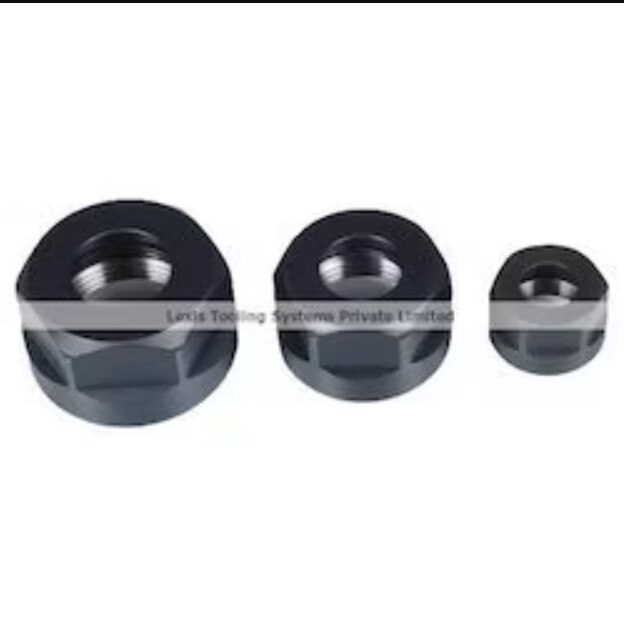
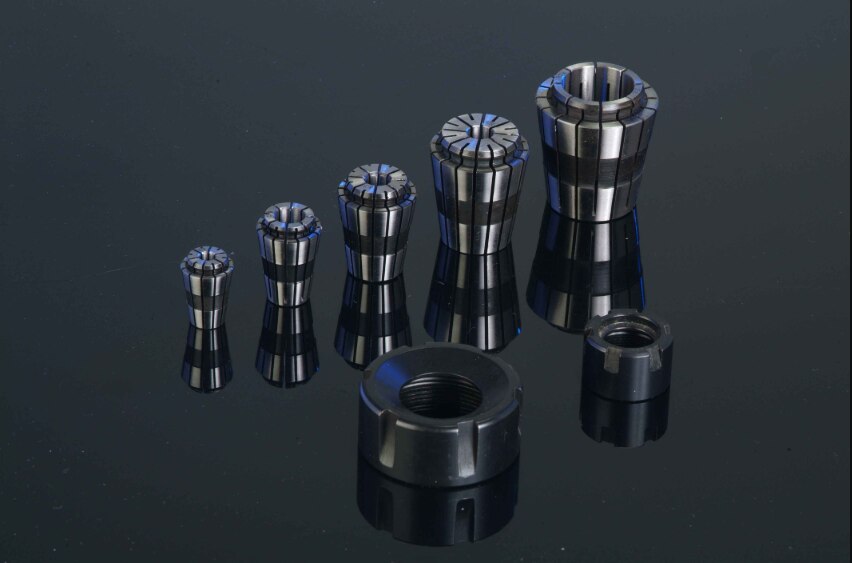
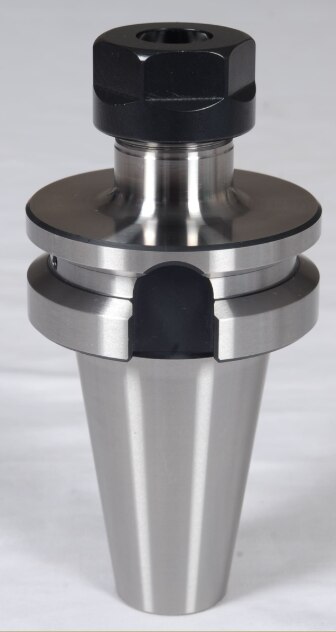
LTX identifies a collet designation, not a complete ER-collet specification. The LTX collet grips the tool or workpiece, the LTX clamping nut retains and seats the collet, and the RD/ER chuck provides the threaded nut seat plus the spindle or toolholder interface. Compatibility depends on the dimensions of all three parts.
| Setup | What the label tells you | What it does not establish |
|---|---|---|
| Conventional ER set | Collet, matching nut and chuck belong to a defined ER size system | Exact bore, taper, accuracy and nut design still require confirmation |
| LTX-labeled assembly | The supplier identifies an LTX collet or nut family | ER size, nominal bore, clamping range, nut type, spindle taper, toolholder interface and required accuracy |
Do not treat an LTX label as you would a verified conventional ER set. An ER32 collet, ER32 nut and ER32 chuck are not automatically interchangeable with ER25 or ER40 parts, and an LTX collet does not prove which ER interface it uses.
Ask for a manufacturer part number or dimensioned drawing before comparing quotations, including offers described as LTX collet options in Tamil Nadu. Confirm:
- Tool or workpiece diameter and stated clamping range
- Stick-out, spindle speed and radial cutting load
- Coolant method and required runout
- Whether the rotating assembly requires a stated balance grade
A nominally matching bore does not prove suitability for high-speed machining. Price the collet, nut and chuck as a documented assembly, not by the LTX label alone.
How to Match the LTX Collet to the Correct ER Wrench
Match the wrench to the supplied nut, not to the collet bore. An ER32 wrench does not become suitable for ER25 or ER40 components because all three use the ER name; the nut size, profile and engagement geometry differ.
1. Confirm the ER family and size, collet bore, nominal clamping range, and machine or holder taper. Record the collet and holder manufacturer part numbers.
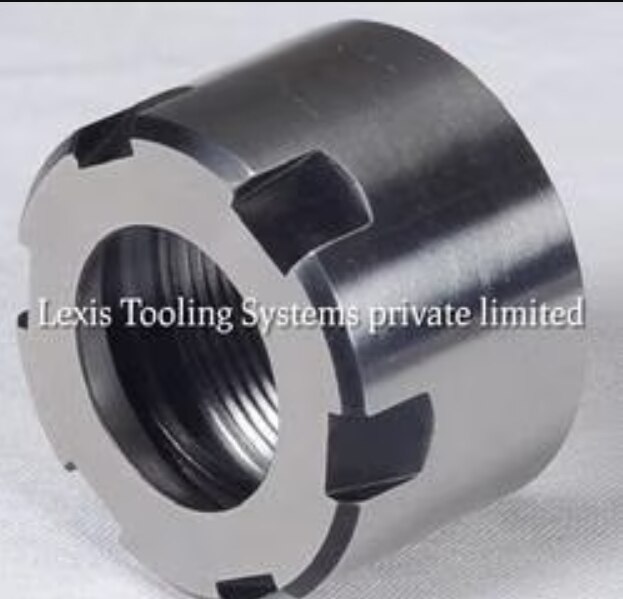
2. Confirm the nut thread size and pitch, external nut profile, and exact LTX clamping-nut model. The wrench is selected primarily by the nut’s outside profile, not the collet bore.
3. Identify the wrench design: hook, pin, hex or spanner-style. Check the engagement geometry and, where applicable, the across-flats dimension. A hook or pin wrench that only partly enters the nut slots can damage them during tightening.
4. Separate standard nuts from bearing-style or friction-reducing nuts. Their outside profiles, tightening procedures and permissible torque can differ, so a standard ER wrench for an LTX collet fits only when the supplied LTX nut has identical profile and engagement dimensions.
5. Require an exact specification naming the wrench type, engagement or across-flats dimension, nut size, compatible LTX clamping-nut models and manufacturer part number. Do not accept “ER wrench” alone.
Confirm whether the wrench is included. Price the collet, clamping nut and wrench as separate line items unless the quotation explicitly bundles them; an apparently low price can omit the nut or wrench.
Safe Fitting, Tightening and Removal Sequence
Torque is a controlled process variable, not a value you estimate from ER wrench length. Ask for the supplied nut’s working torque and maximum torque in N·m, then use a calibrated torque wrench or torque key with the matched ER wrench.
1. Isolate the machine and clean the collet, nut, holder thread, collet seat, taper and all mating faces. Remove chips, oil residue and trapped dirt.
2. Clip the collet into the nut’s eccentric retaining ring. Confirm that the collet is fully engaged around the ring; do not place the collet in the chuck first and force the nut over it.
3. Place the assembled nut and collet onto the chuck or holder. Keep the tapers and faces clean as the assembly seats.
4. Insert the tool or workpiece with sufficient engagement and a diameter inside the manufacturer’s stated clamping range.
5. Start the nut thread by hand. If it does not turn smoothly, stop and inspect for cross-threading or misalignment.
6. Tighten with the matched ER wrench and calibrated torque wrench or torque key to the specified working torque. Do not exceed the nut-specific maximum.
7. After isolating the machine, remove the assembly in reverse order: loosen the nut, withdraw the tool or workpiece, remove the nut and collet, then unclip the collet.
Never tighten an empty ER or LTX collet, leave it partly engaged in the nut, trap dirt between tapers or faces, or force a substantially undersize tool into it. These errors distort slots, damage threads, reduce grip, cause tool pull-out and create later runout.
What Runout Evidence and Machining Claims Are Worth Comparing
Do not accept “high precision” as a performance result. Compare LTX with a conventional ER/RD setup only when both suppliers state the same test conditions and a numerical runout limit.
Ask for:
- Runout figure, measurement location, gauge length and indicator method
- Test arbor or gauge-pin diameter
- Whether the reading is at the collet nose or farther from the chuck
- Results from repeated remove-and-refit tests using the same holder, torque and test shank
Measure the complete cleaned assembly, not an unused collet alone. Spindle taper, holder taper, collet seat, nut face and tool shank contamination can increase indicated runout.
| Evidence | Worth comparing | Weak claim |
|---|---|---|
| Runout | Micrometre value tied to location, gauge length and method | “High precision” |
| Repeatability | Results from repeated removal and refitting | One reading from a new collet |
| Machining result | Same tool diameter, material, speed, feed, depth of cut and stick-out | “Longer tool life” or “higher feed” |
| Accuracy or finish | Same machine, coolant method and comparison system | “Better finish” without a baseline |
Ask which balance grade and complete rotating assembly were used before accepting high-speed claims. A lower runout figure can still cost more through a higher nut or collet price, longer setup time and limited replacement availability. Check the risk of production stopping because a special wrench or nut is unavailable.
A documented gain is valuable only when it outweighs those supply and changeover costs.
How to Compare a Coimbatore Quotation Before You Order
A Coimbatore quotation is comparable only when it identifies the complete collet-and-nut assembly, not just “LTX.” Ask an ltx collet supplier coimbatore to provide this schedule:
- ER size; bore diameter and tolerance; nominal clamping range; collet part number; nut part number; nut thread and nut type.
- Compatible ER wrench part number; wrench engagement dimension; maximum tightening torque in N·m.
- Material or coating; stated runout; gauge length; test method; inspection certificate.
- Package contents: individual collets or a set, LTX clamping nut, ER wrench, case and documentation.
| Quotation wording | What it lets you compare | What to reject |
|---|---|---|
| ER size and bore | Fit, capacity and usable clamping range | “LTX collet” with no dimensions |
| Nut and wrench details | Correct profile, engagement and torque | “ER wrench included” without a part number |
| Runout and test data | Measurement at an agreed gauge length | “High precision” without method or certificate |
LEXIS TOOLING SYSTEMS PRIVATE LIMITED is one supplier you can ask to complete this schedule while you compare the documented assembly against competing offers and other ltx collet options in tamil nadu.
For Tamil Nadu delivery, write the acceptance check into the purchase order. Inspect every part, confirm the wrench clears and fully engages the nut slots, then fit a known straight test shank or gauge pin and record runout at the agreed gauge length. Apply the same test to every ltx collet er wrench coimbatore quotation.
Frequently asked questions
What does the LTX designation identify?
LTX identifies a collet designation, not a complete ER-collet specification. Confirm the collet dimensions, clamping nut and RD/ER chuck interface together.
How do I choose an ER wrench for an LTX collet?
Match the wrench to the clamping nut profile and size, then confirm that it fits the exact RD/ER chuck and nut supplied with the collet.
What is the safe sequence for fitting and removing an LTX collet?
Clean the collet, nut and chuck, seat the collet in the nut before inserting it into the chuck, tighten with the correct wrench, and loosen only after stopping and isolating the machine.
What runout evidence should I compare?
Ask for the measurement location, gauge type, test speed, tool or mandrel diameter, recorded value and inspection date. Compare like-for-like test conditions.
How should I compare an LTX collet quotation in Coimbatore?
Check the exact collet size and range, nut and wrench compatibility, material or grade, inspection documents, quantity, delivery terms, taxes, warranty and replacement policy.