

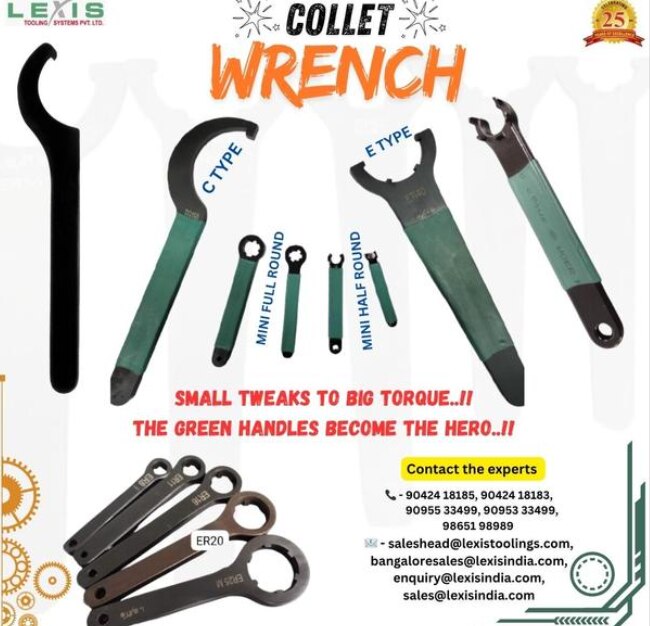
A poorly fitting wrench can damage ER nut slots, while incorrect tightening can cause tool slip, difficult removal, or avoidable runout. By the end, you will know how the correct ER wrench improves assembly, how to tighten safely, and what specifications to check before buying in India.
Key takeaways
- Use full wrench engagement on the ER nut flats to prevent slot damage.
- Follow the chuck maker’s assembly sequence and specified torque value.
- Clean the collet, tool shank, nut and taper before checking runout.
- Match the wrench to the ER nut profile, not only the collet size.
Why the Correct ER Wrench Improves an ER Chuck Change
Full engagement on the ER nut flats is the main advantage of an ER wrench for ER collet chuck work. The hook-wrench form reaches the nut slots without slipping across them, so you tighten in the confined space around the chuck with less risk of bruising the slots or scraping the nut.
| Tool | Problem during ER changes | Purpose-made ER wrench benefit |
|---|---|---|
| Generic adjustable wrench | Contacts flats unevenly and can slip | Engages the specified nut securely |
| Pin spanner | Loads one or two holes instead of the nut profile | Spreads force across the correct slots |
| Impact tool | Delivers uncontrolled shock and excessive torque | Allows deliberate hand tightening |
| Pipe extension | Multiplies leverage beyond the nut specification | Keeps leverage predictable |
These ER wrench benefits matter to ER collet for chuck users in India because damaged threads, distorted bearing surfaces and deformed collet slots make later tool changes slow and clamping less repeatable. An impact gun or extended handle is unsuitable for normal ER assembly.
- Snapped the collet into the nut’s eccentric retaining ring.
- Inserted the tool to the recommended depth and fitted the nut to the chuck by hand.
- Supported the spindle, then tightened without striking the wrench or extending its handle.
The correct wrench improves control; it does not set torque automatically. Use the torque value specified for that nut and chuck, and check runout at the tool shank or gauge point after cleaning. A bent tool, dirt or a damaged taper needs correction, not a new wrench.
Use the ER Wrench with the Correct Assembly Sequence and Torque
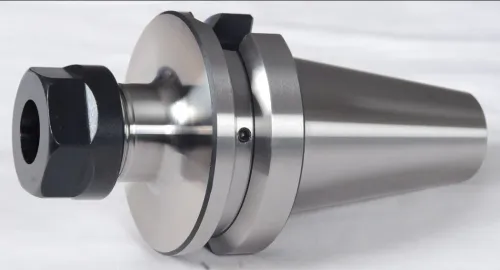
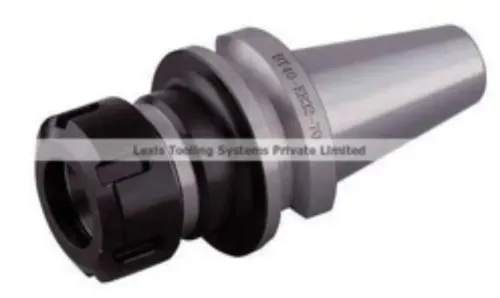
An ER wrench for an ER collet chuck only works safely when the collet, nut, tool and chuck are assembled in the correct order. The ER collet chuck benefits from full nut engagement and repeatable clamping; neither comes from guessing based on wrench length.
1. Snap the collet into the nut’s eccentric retaining ring first. Press the collet in at an angle until its groove captures the ring completely. Do not place a loose collet in the chuck and then push the nut over it; incomplete capture can produce inaccurate clamping or eject the collet.
2. Insert the clean tool shank into the captured collet. Keep the tool within the collet’s usable gripping length and avoid clamping on a flute, radius or damaged section.
3. Thread the nut onto the chuck by hand until it seats freely. Support or lock the spindle according to the machine procedure, then engage the nut flats fully with the specified ER wrench.
4. Tighten with a torque wrench or approved torque-controlled method using the torque value stated by the chuck or nut manufacturer. The ER wrench supplies access and leverage, not torque control. Never strike it, add a pipe extension or use an impact gun for normal assembly.
Excess torque can deform collet slots, wear the nut threads and make the next tool change difficult. After tightening, check the tool at its shank or gauge point; a tight nut does not correct dirt, a bent shank or damaged seating surfaces.
Torque Does Not Fix Runout: Protect the Collet, Tool and Taper
A high reading at the tool shank is not proof that the ER nut needs more torque. Clean the spindle taper, chuck taper, collet, nut threads and tool shank, then assemble correctly and measure runout at the shank or cutting-tool gauge point—not only on the nut’s outside diameter.
Check these clues:
- If runout changes after cleaning, reseating the collet, or applying the specified torque with the correct wrench, contamination or uneven clamping caused the problem.
- If the same collet produces excessive runout with several known-straight tools, inspect its slots, bore and seating surfaces for wear or damage. A worn collet can grip while running eccentrically.
- If runout follows one tool when you move it to another clean collet and chuck, check the tool shank on a surface plate or dial indicator. A bent shank will not respond to higher torque.
- If a clean, straight tool and serviceable collet still run out in one chuck, inspect the chuck taper for dents, raised metal or fretting marks. A damaged taper needs repair or replacement, not a stronger wrench.
Over-tightening can deform collet slots, damage the nut’s bearing surfaces and accelerate thread wear. It cannot straighten a tool or restore a taper. The ER collet chuck benefits of repeatable gripping and low runout depend on clean interfaces, a close bore-to-shank match and controlled torque.
Match the Wrench to the ER Nut, Not Just the Collet Size
A stated ER20 collet does not identify the correct wrench. Specify the ER series, nut thread, nut outside diameter, and allowable clamping range under DIN 6499 or ISO 15488; ER11, ER20, ER25, ER32, ER40 and ER50 components are not interchangeable.
1. Confirm the chuck series and nut type from the chuck or nut marking. Standard, sealed, bearing-supported, mini and high-speed nuts can use different hook-wrench profiles even when their outside diameters look similar.
2. Request the wrench part number and dimensional drawing. Check that its hook matches the nut slots, the working diameter clears the chuck body, and the hook reaches full slot depth without rocking on the nut.
3. Match the nut thread and outside diameter to the chuck manufacturer’s drawing, not to a catalogue photograph. A wrench that fits the apparent diameter but misses the thread or slot geometry can round the nut and prevent the specified torque.
4. Verify the wrench against a sample nut before purchase. Seat it squarely, engage every available slot, and confirm that the handle clears the spindle, tool and machine enclosure throughout the turn.
5. Ask for the nut manufacturer’s tightening-torque specification for that exact ER size and design. Wrench length does not establish torque; an oversized handle can deform collet slots, bearing surfaces and threads.
Use the complete designation in your order: “ER32 under ISO 15488, sealed nut, manufacturer’s nut reference, matching hook wrench.” That precision protects the ER collet chuck benefits of repeatable clamping and quicker changes.
What Indian Buyers Should Put in an ER Wrench RFQ
Put the installed chuck details in the RFQ, not only “ER wrench.” State the ER series, nut type, wrench size and profile, installed chuck brand, and DIN 6499 or other specification. A wrench that fits an ER32 standard nut can damage the slots on a sealed, bearing-supported, mini or high-speed nut.
Ask every er wrench supplier india to quote these items:
- Required wrench quantity, spare quantity, material and heat-treatment condition
- Manufacturer torque recommendation and the nut profile used to achieve it
- Replacement wrench, nut and collet availability, with lead times
- Dimensional drawing or confirmation against your exact chuck and nut
- Maximum permitted speed, balancing grade and documentation for the complete holder, collet, nut and tool assembly
Compare quotations on the same evidence:
| Supplier type | What to verify | Risk if missing |
|---|---|---|
| Low-price general supplier | Nut drawing, profile and replacement policy | A universal spanner rounds the nut and prevents correct torque |
| Chuck-compatible supplier | Installed brand, ER series and torque data | Compatibility is assumed rather than demonstrated |
| High-speed tooling supplier | Assembly balancing grade and maximum rpm in writing | The lowest-rated component limits safe speed |
For buyers sourcing ER chuck tooling accessories in Tamil Nadu, include the number of matched nuts and collets required, plus the tool-shank range. LEXIS TOOLING SYSTEMS PRIVATE LIMITED can be evaluated by asking for matched component dimensions rather than treating an ER20 or ER50 label as proof of interchangeability.
A low purchase price is false economy if a poor fit ruins a precision nut.
Related items
ER Collets We are engaged in manufacturing and supplying of qualitative ER Collet. View product → |
ER Collets ER20 Collet system also known as RD20 Collet system are standardized and manufactured as per DIN 6499 standard guidelines and are truly... View service → |
Frequently asked questions
Why does the correct ER wrench improve an ER chuck change?
A correctly matched hook wrench engages the ER nut slots fully, reducing slipping, bruised slots and scraping while you tighten in the confined space around the chuck.
What assembly sequence and torque should you use with an ER wrench?
Seat the collet in the ER nut before inserting it into the chuck, fit the tool to the required depth, tighten the nut by hand, then use the specified torque for that chuck and nut. Do not use impact tools or guess the torque.
Can higher torque fix runout in an ER collet chuck?
No. Excess torque cannot correct dirt, a damaged collet, a bent tool shank, incorrect collet seating or contamination on the chuck taper. Clean and inspect these parts before measuring runout.
How do you match an ER wrench to the ER nut?
Identify the nut’s outside profile, slot pattern and size marking, then select the matching wrench. The collet designation alone does not guarantee that one wrench fits every ER nut.
What should Indian buyers include in an ER wrench RFQ?
State the ER nut type and size, slot or face profile, required quantity, material or finish, machine application, delivery location, inspection requirements and whether you need a sample or drawing.
Related items
ER Collets ER50 Collet system also known as RD50 Collet system are standardized and manufactured as per DIN 6499 standard guidelines and are truly... View service → |
 | Precision Turned Components ER Collet Chuck View product → |